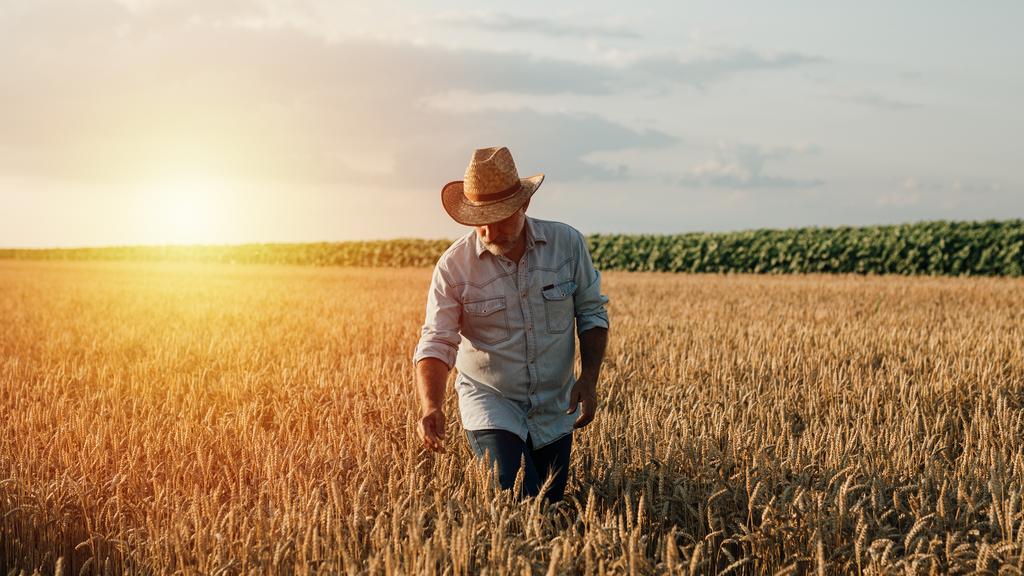
Tithing – A Farmer for God
What if the greatest harvest God gives you was never intended for you alone?
1. We Are All Farmers in God's Kingdom
Every farmer understands that a harvest does not come by luck. It takes faith, discipline, patience, and care. A farmer prepares the soil, plants the seed, waters it, protects it, and trusts God for the increase.
But before a farmer can harvest anything, something must first be planted.
The same principle applies to our lives.
We are all farmers in God's Kingdom. Some plant words of encouragement. Others plant knowledge, wisdom, kindness, time, skills, or financial resources.
God has entrusted every person with something valuable. It may be a talent, an opportunity, an income, a dream, or simply the ability to help another person.
The question is not whether you have a seed.
The question is: What are you doing with the seed God has given you?
1 Corinthians 3:6–7
"I planted the seed, Apollos watered it, but God has been making it grow."
This scripture teaches us something important. We each have a responsibility to plant and nurture, but ultimately, growth comes from God.
You may plant something today and never personally witness its full harvest. That does not mean your contribution was wasted.
Sometimes the seed you plant becomes the beginning of someone else's future.
2. Understanding Tithing – More Than Money
Tithing is traditionally understood as giving a tenth of what we receive.
In the Old Testament, the tithe formed part of Israel's worship and provision for the Levites and others in need.
Leviticus 27:30 teaches that a tenth of the produce of the land belongs to the Lord.
Deuteronomy 14:28–29 also describes how tithes were used to provide for the Levites, foreigners, orphans, and widows.
These passages remind us that giving was connected not only to worship but also to the welfare of a community.
However, the deeper lesson we can draw from tithing extends beyond a financial percentage.
It is the recognition that what we possess is not entirely the result of our own efforts. Our abilities, opportunities, resources, and even the time we have been given are gifts entrusted to us.
Psalm 24:1
"The earth is the Lord's, and everything in it, the world, and all who live in it."
If everything ultimately belongs to God, then we should ask ourselves how we are using what He has placed in our hands.
This does not mean the Bible commands us to give exactly 10% of our time, knowledge, or talents. Rather, the principle of tithing can lead us into a much broader understanding of stewardship.
Giving is not simply about how much we release from our hands. It is also about what we allow God to accomplish through them.
3. The Farmer Does Not Eat All His Seed
Imagine a farmer who receives a wonderful harvest.
His fields are full, his family is provided for, and his work has been rewarded.
Now imagine that farmer decides to consume everything he has harvested.
He keeps nothing to plant again. He shares nothing with his neighbours. He makes no provision for the next season.
For a moment, he may feel wealthy.
But what happens when the next planting season arrives?
The farmer understands something that we often forget:
Not everything we receive is meant to be consumed by us.
Some of what we receive must be preserved. Some must be shared. Some must be invested into the future.
This is not only a financial principle. It is a principle for living.
If you have knowledge, share it.
If you have experience, mentor someone.
If you have financial resources, help where there is genuine need.
If you have influence, use it to open doors for others.
If you have wisdom, do not keep it to yourself.
2 Corinthians 9:6
"Whoever sows sparingly will also reap sparingly, and whoever sows generously will also reap generously."
This verse encourages generosity, but it should not be misunderstood as a guarantee that every financial gift will produce financial wealth.
God's increase is not always measured in money.
Sometimes the harvest is a person finding employment, a child receiving an education, a family finding hope, or someone discovering a better way to live.
A Kingdom farmer understands that a fruitful life is not measured only by what he accumulates, but also by what grows because he was there.
4. Everyone Has a Seed, Regardless of Their Income
Consider three people:
A cleaner, an administrator, and an IT manager.
They may earn different salaries, have different responsibilities, and possess different skills.
Yet all three have something valuable to contribute.
The cleaner may have very little money to spare but can offer wisdom gained through years of experience.
The administrator may help someone prepare a CV, complete an application, or learn how to manage personal finances.
The IT manager may mentor a young person who has never had access to technology or professional guidance.
Each person has a seed.
And each seed has the potential to produce fruit.
1 Peter 4:10
"Each of you should use whatever gift you have received to serve others, as faithful stewards of God's grace in its various forms."
Notice that this scripture does not limit service to financial giving.
It speaks about whatever gift we have received.
Your gift may be the very thing someone else needs to take their next step.
This is why we should never measure a person's ability to contribute to God's Kingdom by the size of their salary.
A person with little money may have extraordinary wisdom.
A person without professional qualifications may possess years of practical knowledge.
A person who has experienced hardship may be uniquely equipped to encourage someone facing the same struggle.
Do not underestimate the value of what God has placed within you.
5. Giving Should Grow People, Not Only Provide for Them
There is great value in helping someone who is hungry, sick, elderly, disabled, or unable to provide for themselves.
Compassion is central to Christian living.
Matthew 25:35–40 teaches us that caring for those who are hungry, thirsty, vulnerable, or in need is an expression of service to Christ.
But where someone has the ability and opportunity to grow, our giving can go further.
Imagine teaching someone how to fish instead of only giving them a fish.
Now imagine helping that person understand how to preserve the fish, sell what they do not need, manage their income, and eventually teach someone else.
One act of generosity has now become an opportunity for growth.
This is what it means to cultivate people.
Giving can provide immediate relief, but wisdom, mentorship, education, and opportunity can create lasting change.
Both forms of giving are important.
Someone who cannot work because of illness or disability may need continued support rather than a lesson in independence. Compassion means recognising the difference.
Proverbs 11:25
"A generous person will prosper; whoever refreshes others will be refreshed."
Prosperity should not be understood only as financial wealth. A life rich in kindness, wisdom, relationships, and service can be deeply fruitful.
Ask yourself:
Does my giving only meet a need today, or can it also create an opportunity for tomorrow?
6. Your Harvest Carries a Responsibility
Imagine earning an income and deciding that a portion of what you receive will consistently be used to help others.
Perhaps you choose to give 5% to someone who helps maintain your home and another 5% to support a person or family in need.
Perhaps you contribute to your church, help a young person with educational expenses, support an elderly neighbour, or assist someone who has lost their employment.
These are examples of personal generosity, not a biblical instruction to divide a tithe into specific percentages.
The important principle is to give intentionally, responsibly, and with love.
2 Corinthians 9:7
"Each of you should give what you have decided in your heart to give, not reluctantly or under compulsion, for God loves a cheerful giver."
Giving should never become a competition, a performance, or a way of proving that we are more faithful than someone else.
Nor should we give recklessly while neglecting those whom God has already entrusted to our care.
Our responsibility includes caring for our families, managing our resources wisely, and helping others according to our ability.
A Kingdom farmer does not destroy his own field to prove that he is generous.
He learns how to cultivate it so that it can continue producing fruit.
Generosity without wisdom may help for a moment. Generosity guided by wisdom can continue helping for generations.
7. Planting Is an Act of Faith, Not a Transaction
A farmer cannot force a seed to grow.
He can prepare the soil, provide water, remove weeds, and protect what he has planted.
But he cannot command the harvest.
He must exercise patience.
Our giving should reflect the same attitude.
We should not give simply because we expect God to return more money, greater success, or special treatment.
We give because we love God and recognise our responsibility towards others.
Galatians 6:9
"Let us not become weary in doing good, for at the proper time we will reap a harvest if we do not give up."
Sometimes doing good produces results that we can see immediately.
Other times, the impact may only become visible years later.
A conversation may change someone's thinking.
An opportunity may change someone's career.
An act of kindness may restore someone's hope.
A lesson shared with a child may influence the decisions they make as an adult.
You may never know how far your seed travels.
Faithfulness is not measured only by the harvest you witness, but also by your willingness to keep planting what is good.
8. The Greatest Harvest Is People
Think about the people around you.
Your family. Your colleagues. Your neighbours. The young people in your community. The elderly. Those who are struggling to find their way.
How many of them could grow because of something you already possess?
Perhaps you have spent years developing a skill that someone else is desperate to learn.
Perhaps you understand money because you once struggled financially.
Perhaps you have made mistakes that could help someone else avoid unnecessary suffering.
Perhaps your greatest gift is simply the ability to listen, encourage, and guide.
These are all opportunities to plant.
Matthew 5:16
"Let your light shine before others, that they may see your good deeds and glorify your Father in heaven."
We are not called to shine so that others may admire us.
We are called to shine so that others may experience God's goodness through our actions.
A farmer does not grow crops merely to admire his field.
He grows them because they have a purpose.
And in God's Kingdom, one of the greatest purposes of what we have been given is to serve others.
A true Kingdom farmer does not only grow a harvest. He helps people become fruitful.
9. Become a Farmer in God's Kingdom
We often ask God to bless what we are doing.
But perhaps we should also ask whether what we are doing is becoming a blessing to others.
What are we planting?
What are we nurturing?
What are we keeping for ourselves that could help someone else grow?
Luke 12:48
"From everyone who has been given much, much will be demanded; and from the one who has been entrusted with much, much more will be asked."
This is a reminder that receiving something valuable also brings responsibility.
If you have been given knowledge, use it wisely.
If you have been given wealth, manage it responsibly.
If you have been given influence, use it with humility.
If you have been given time, spend some of it serving others.
If you have been given an opportunity, consider how you might create opportunities for someone else.
Tithing introduces us to the discipline of giving, but the greater lesson of stewardship invites us to consider our entire lives.
It challenges us to recognise that everything we possess can become an instrument of good.
Not everyone can give the same amount.
Not everyone can contribute in the same way.
But everyone can examine what has been entrusted to them and consider how it might serve God's purposes.
10. A Challenge to Every Kingdom Farmer
This week, take a moment to reflect on three questions:
1. What seed has God placed in my hands?
Consider your knowledge, income, talents, experience, time, and opportunities.
2. Who around me needs something that I can provide?
Look beyond your immediate needs. Consider your family, workplace, church, and community.
3. What can I plant today that may produce fruit in someone else's life tomorrow?
It does not have to be something extraordinary.
Teach someone a skill.
Share a useful lesson.
Help someone prepare for an opportunity.
Encourage someone who has lost hope.
Give where there is genuine need.
Support someone who cannot support themselves.
Start with what you have.
Start where you are.
And remember that the value of a seed is not determined by how impressive it looks in your hand, but by what it can become when it is planted.
Ecclesiastes 11:6
"Sow your seed in the morning, and at evening let your hands not be idle, for you do not know which will succeed, whether this or that, or whether both will do equally well."
You may not know which act of generosity, kindness, or wisdom will make the greatest difference.
But that should never stop you from planting.
Final Reflection
Tithing reminds us to give.
Stewardship teaches us to care for what we have received.
Generosity teaches us to share.
Wisdom teaches us how to make what we have been given fruitful.
And love reminds us why we do it.
We are all farmers in God's Kingdom.
Some plant. Some water. Some nurture. And God gives the growth.
Do not spend your entire life counting only what you have harvested.
Take time to consider what has grown in the lives of others because of the seeds you planted.
Your greatest harvest may not be what you leave behind for yourself, but what continues growing in others long after you are gone.
Plant with faith. Give with love. Grow with wisdom.
onegod.africa
Kingdom Wisdom in Africa