
ONE GOD AFRICA · KINGDOM WISDOM
The Servant King
A Reflection on Jesus' Leadership. The King who came not to be served, but to serve.
Brothers and sisters, I write to you about a man—Jesus of Nazareth—who walked among us as the very image of God's love.
In approximately three years of public ministry, He accomplished what no ordinary man could accomplish in a lifetime.
He did not come with the sword.
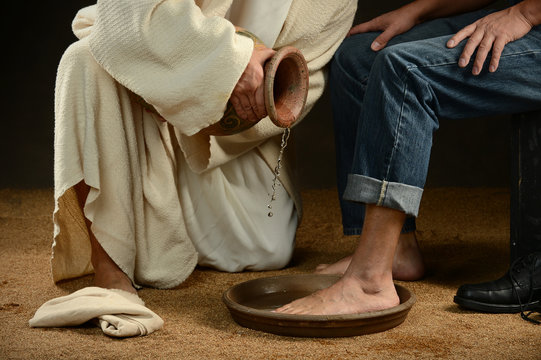
He came with a towel to wash the feet of those who followed Him.
He did not come to build an earthly empire through wealth, military strength, or political power.
He came to reveal the Kingdom of God.
And this Jesus, the Son of God, laid down His life that we might live.
He taught us something that continues to challenge the way we understand leadership.
The greatest among us must become the servant of all.
But before we understand how Jesus led, we must first understand why He came, what He taught, and what His example requires from us.
1. Why Were We Created?
Have you ever asked yourself why God created us?
Why are we here?
What is the purpose of our existence?
Is life simply about waking up, working, earning money, buying possessions, and eventually dying?
Is our purpose to become famous?
To gain power?
To become more important than the people around us?
Or is there something greater?
Brothers and sisters, I believe we were created to seek God, to know Him, and to make Him known.
We were not created merely to chase every desire this world places before us.
We were created for a relationship with our Creator.
"For in him we live, and move, and have our being."
ACTS 17:28 — KJV
Paul spoke these words while addressing people in Athens who worshipped many different gods.
He directed their attention towards the Creator who gives life to all.
Think about that.
Before you had a name recognised by society, you had life.
Before you earned a salary, you had life.
Before you became a parent, professional, or leader, you had life.
And that life did not begin with your achievements.
So why should our achievements become the centre of our existence?
"But seek ye first the kingdom of God, and his righteousness; and all these things shall be added unto you."
MATTHEW 6:33 — KJV
Jesus directs us towards God's Kingdom and righteousness.
He does not teach us to abandon our responsibilities.
He teaches us to understand what must come first.
You can work.
You can build a business.
You can develop your gifts.
You can provide for your family.
But do not allow these things to become greater than the God who gave you life.
Before you ask what you want to become in this world, ask yourself whether the life you are building is drawing you closer to the One who created you.
2. The King Who Came to Serve
When we think about kings, what comes to mind?
Thrones.
Palaces.
Wealth.
Armies.
Servants waiting to receive instructions.
We imagine someone who has authority over many people.
Someone who gives orders.
Someone whom others must obey.
Now consider Jesus.
Christians confess Him as the Son of God and King of kings.
Yet when He walked among people, He demonstrated a form of leadership that challenged their expectations.
He spent time with fishermen.
He spoke to people who were rejected by society.
He welcomed children.
He showed compassion towards the sick.
He taught ordinary people about the Kingdom of God.
And He challenged leaders who used religious authority for personal recognition.
"For even the Son of man came not to be ministered unto, but to minister, and to give his life a ransom for many."
MARK 10:45 — KJV
Notice what Jesus says.
He did not come to be served.
He came to serve.
Now compare that with how leadership is sometimes understood today.
People want positions because positions bring authority.
People want titles because titles bring recognition.
People want followers because followers can make them feel important.
But Jesus shows us that leadership carries responsibility towards those we lead.
A leader should not exist only to receive benefits from others.
A leader should also contribute towards their wellbeing.
Jesus did not measure greatness by how many people served Him. He demonstrated greatness through His willingness to serve others.
3. The Humble Path
Jesus could have pursued the recognition associated with earthly kings.
Instead, His life demonstrated humility.
He did not build His ministry around displaying personal wealth.
He did not teach His disciples to become more important than everyone else.
He taught them to serve.
"But made himself of no reputation, and took upon him the form of a servant, and was made in the likeness of men."
PHILIPPIANS 2:7 — KJV
Paul presents the humility of Christ as an example for believers.
Now let us examine ourselves.
What happens when we become successful?
Do we begin to treat people differently?
Do we stop listening to those who have less experience?
Do we believe that our position makes us more valuable than another person?
Do we expect everyone to recognise our achievements?
These are questions worth asking.
Because success can reveal something about our character.
Some people become more generous when they gain influence.
Others become more concerned about protecting their status.
Some use their experience to teach.
Others use their experience to make people feel inferior.
Jesus teaches us a different way.
"So the last shall be first, and the first last."
MATTHEW 20:16 — KJV
Jesus speaks these words at the conclusion of the parable of the workers in the vineyard.
The parable challenges assumptions about reward, entitlement, and God's generosity.
It reminds us that God's Kingdom does not operate according to every measure of status we create for ourselves.
Humility does not mean you must deny your abilities.
It means recognising that your abilities do not make you superior to others.
You can become excellent at what you do without believing that you are greater than the people around you. Humility and competence can exist together.
4. The Towel and the Throne
Consider one of the most powerful examples of leadership in the life of Jesus.
The washing of His disciples' feet.
In the world Jesus lived in, people travelled on dusty roads wearing sandals.
Washing feet was a practical act of hospitality, often associated with lowly service.
Yet Jesus, whom His disciples recognised as Teacher and Lord, took a towel and washed their feet.
"He riseth from supper, and laid aside his garments; and took a towel, and girded himself."
JOHN 13:4 — KJV
Imagine being one of those disciples.
You have followed Jesus.
You have listened to His teachings.
You have witnessed His miracles.
You recognise Him as your Teacher.
And now He is kneeling before you, washing your feet.
What lesson is He teaching?
Jesus explains it Himself.
"If I then, your Lord and Master, have washed your feet; ye also ought to wash one another's feet."
JOHN 13:14 — KJV
He did not abandon His identity as their Lord and Teacher.
He demonstrated what His leadership looked like.
Now consider the way we treat people in everyday life.
Would a manager help someone with a task they consider beneath their position?
Would a father help clean the home rather than believe every household task belongs to someone else?
Would a pastor assist someone without expecting recognition?
Would a successful person give time to someone who has nothing to offer in return?
These are ordinary situations.
But they reveal extraordinary lessons about character.
Jesus shows us that service is not something reserved for people without authority.
It is something those with authority should understand.
The King took a towel. If Jesus could kneel to serve His disciples, what makes us believe that serving another person is beneath us?
5. Trust in the Lord
Brothers and sisters, how often do we believe we know what is best for our lives?
We make plans.
We set goals.
We build careers.
We decide where we want to live and what we want to achieve.
Planning is important.
But what happens when our plans do not work?
What happens when we lose the job we believed was secure?
What happens when a relationship ends?
What happens when we face a challenge we did not prepare for?
These are moments when our trust is tested.
"Trust in the LORD with all thine heart; and lean not unto thine own understanding. In all thy ways acknowledge him, and he shall direct thy paths."
PROVERBS 3:5–6 — KJV
Scripture does not teach us to abandon wisdom or responsibility.
It teaches us not to make our own understanding the highest authority in our lives.
Think about Jesus in the garden of Gethsemane.
He knew suffering was approaching.
He prayed to the Father.
"Nevertheless not my will, but thine, be done."
LUKE 22:42 — KJV
These words reveal obedience through extraordinary suffering.
Jesus did not teach that faith means we never experience distress.
He demonstrated faithfulness even when the path involved sacrifice.
We must be careful not to confuse trusting God with expecting every difficulty to disappear.
Sometimes we must persevere.
Sometimes we must seek help.
Sometimes we must change direction.
And sometimes we must accept that we do not have every answer.
Trusting God does not mean you will understand every season of your life. It means continuing to seek His wisdom while taking responsibility for the steps before you.
6. Do Not Be Anxious About Tomorrow
How much time do we spend worrying about tomorrow?
Will I have enough money?
Will I keep my job?
Will my business succeed?
Will my family be safe?
Will I achieve the things I have planned?
We ask these questions because we care about our future.
And many of these concerns involve real responsibilities.
But Jesus teaches us to examine the place that worry occupies in our lives.
"Behold the fowls of the air: for they sow not, neither do they reap, nor gather into barns; yet your heavenly Father feedeth them. Are ye not much better than they?"
MATTHEW 6:26 — KJV
Jesus directs attention towards the birds.
He uses creation to teach His listeners about the Father's care.
Later, He speaks about the lilies of the field.
His lesson is not that people should stop working, planning, or caring for their families.
It is that anxiety should not become the ruler of our lives.
Consider the difference between responsibility and worry.
Responsibility asks, "What can I do today?"
Worry repeatedly asks, "What if everything goes wrong tomorrow?"
Responsibility encourages action.
Worry can leave us trapped in possibilities we cannot control.
"Take therefore no thought for the morrow: for the morrow shall take thought for the things of itself. Sufficient unto the day is the evil thereof."
MATTHEW 6:34 — KJV
Jesus teaches us not to allow tomorrow's concerns to overwhelm today's responsibilities.
That does not mean the future is unimportant.
It means we should recognise the limits of what we can control.
Work with diligence.
Make wise decisions.
Prepare where you can.
And continue trusting God through uncertainty.
Do what is required of you today. Prepare wisely for tomorrow. But do not allow fear of the future to take away the life you have been given in the present.
7. A New Community
Brothers and sisters, no person enters life knowing everything.
We learn from others.
We develop through relationships.
We receive guidance from people who have walked certain paths before us.
And at different moments, we may need someone to stand beside us.
Jesus did not conduct His ministry in isolation.
He called disciples.
He taught them.
He sent them to serve.
He prepared them to carry His message to others.
Through Christ, believers are brought into a spiritual family.
"Now therefore ye are no more strangers and foreigners, but fellowcitizens with the saints, and of the household of God."
EPHESIANS 2:19 — KJV
Paul describes believers as members of God's household.
Think about the meaning of a household.
People belong.
They have responsibilities towards one another.
They learn to live together despite differences.
They support one another through difficulty.
Now think about our communities.
How many people live near one another but remain strangers?
How many young people are growing up without someone willing to guide them?
How many families are struggling without meaningful support?
How many people attend gatherings yet still feel alone?
If we speak about God's Kingdom, we should also consider how we contribute towards the wellbeing of others.
"Behold, how good and how pleasant it is for brethren to dwell together in unity!"
PSALM 133:1 — KJV
Unity does not mean that everyone must have the same personality, background, or opinion.
It means learning to live with love, mutual respect, and shared responsibility.
Jesus prayed for unity among those who would believe in Him.
"That they all may be one; as thou, Father, art in me, and I in thee."
JOHN 17:21 — KJV
The unity Jesus prayed for is rooted in the relationship between Himself and the Father.
It is not merely a social arrangement.
It is a spiritual calling that should shape how believers treat one another.
Do not become so focused on building your own life that you forget the people around you. God's Kingdom calls us into a community where love must become action.
8. Love Is the Evidence
How will people know that we are followers of Jesus?
By the clothes we wear?
By the buildings in which we gather?
By the titles we give ourselves?
By how loudly we speak about our faith?
Jesus gives His disciples a clear answer.
"By this shall all men know that ye are my disciples, if ye have love one to another."
JOHN 13:35 — KJV
Notice that Jesus speaks about love.
Not popularity.
Not wealth.
Not professional status.
Love.
But what does love look like?
Love can mean helping someone who is struggling.
It can mean listening when someone needs to speak.
It can mean correcting someone with patience rather than humiliating them.
It can mean refusing to take advantage of another person's weakness.
It can mean forgiving while still maintaining wise boundaries.
It can mean choosing honesty when dishonesty would benefit you.
Now consider your daily life.
How do you treat the people who work with you?
How do you treat your spouse?
How do you speak to your children?
How do you respond when someone makes a mistake?
How do you treat people who cannot repay your kindness?
These questions reveal something about our character.
"My little children, let us not love in word, neither in tongue; but in deed and in truth."
1 JOHN 3:18 — KJV
John reminds believers that love should be demonstrated through actions.
We can speak about love all day.
But if our actions continually contradict our words, what are we teaching others?
The evidence of following Jesus is not simply found in what we say about Him. It should also be visible in the way we treat the people around us.
9. The Cost of Following Jesus
We often speak about the blessings of following Jesus.
Peace.
Hope.
Forgiveness.
Purpose.
And the promise of eternal life.
But Jesus also spoke about the cost of discipleship.
Following Him was never presented as a promise of a comfortable life without difficulty.
"And he said to them all, If any man will come after me, let him deny himself, and take up his cross daily, and follow me."
LUKE 9:23 — KJV
Jesus calls His followers to deny themselves and follow Him.
This is not a call to abandon personal dignity or accept abuse.
It is a call to place loyalty to Christ above selfish ambition and competing desires.
Consider how difficult that can become.
Sometimes doing what is right may cost you an opportunity.
Sometimes honesty may cost you money.
Sometimes refusing to participate in wrongdoing may cost you popularity.
Sometimes serving others requires giving up your own comfort.
Jesus Himself demonstrated extraordinary sacrifice.
He was rejected.
He was betrayed.
He was falsely accused.
He suffered crucifixion.
Yet Christians believe that His death and resurrection stand at the centre of God's saving work.
"Greater love hath no man than this, that a man lay down his life for his friends."
JOHN 15:13 — KJV
Jesus speaks about sacrificial love.
His example should challenge our understanding of commitment.
Do we only serve when it is convenient?
Do we only love when people agree with us?
Do we only remain faithful when things are going well?
Or are we willing to continue doing what is right when it requires sacrifice?
Following Jesus is not simply about receiving the comfort of His promises. It is also about learning to live according to His teachings when doing so requires courage and sacrifice.
10. Becoming a Servant Leader
Brothers and sisters, let us bring this teaching back to leadership.
What makes someone a great leader?
Is it the number of people who follow them?
Is it the amount of money they earn?
Is it the position they hold?
Or is it the responsibility they accept for the people they lead?
Jesus gives His disciples a direct instruction.
"But whosoever will be great among you, let him be your minister; And whosoever will be chief among you, let him be your servant."
MATTHEW 20:26–27 — KJV
Now think about the different roles we occupy.
As a Father or Mother
Your children need guidance, patience, protection, and love.
Leadership in the home should not be reduced to demanding obedience.
It should also involve demonstrating the values you want your children to learn.
As a Professional
Your experience can help others develop.
Do you share your knowledge?
Do you support those who are still learning?
Do you take responsibility when something goes wrong?
Or do you use your position to make yourself appear more important?
As a Leader in the Church
Leadership should reflect the teachings of Jesus.
It should not become a pursuit of personal status or unquestionable authority.
Those who teach others should also be willing to examine their own conduct.
As a Member of Your Community
You may encounter people who need guidance.
Young people who need encouragement.
Families who need support.
Individuals who need someone to listen.
You may not be able to solve every problem.
But you can consider what you are able to contribute.
Sometimes that contribution is your time.
Sometimes it is your knowledge.
Sometimes it is a practical act of kindness.
And sometimes it is simply being present.
"But be ye doers of the word, and not hearers only, deceiving your own selves."
JAMES 1:22 — KJV
James reminds us that hearing the Word is not enough.
We must put it into practice.
It is easy to speak about humility.
It is harder to practise humility when we believe we are right.
It is easy to speak about service.
It is harder to serve when nobody is watching.
It is easy to speak about love.
It is harder to demonstrate love when someone has disappointed us.
But these are the moments when our character is revealed.
Do not become a leader who only teaches others what they should do. Become a leader whose actions demonstrate the wisdom you are teaching.
Final Reflection
Brothers and sisters, take time to understand this closing.
In approximately three years of public ministry, Jesus changed the course of history.
He did not come seeking fame.
He did not come pursuing earthly wealth.
He did not build His Kingdom through the sword.
He came teaching the truth about the Father.
He came demonstrating love.
He came serving those whom others often overlooked.
And He gave His life that we might live.
Now consider the example He has given us.
The King of kings took a towel and washed the feet of His disciples.
Think about that.
The One they called Lord and Teacher demonstrated humility through service.
He did not consider serving others beneath Him.
Yet how often do we allow our own titles, achievements, and positions to convince us that we are too important to serve?
We want recognition.
We want success.
We want influence.
We want people to respect us.
But are we willing to accept the responsibilities that come with leadership?
Are we willing to guide someone who is still learning?
Are we willing to help someone who cannot repay us?
Are we willing to forgive?
Are we willing to place the wellbeing of others above our desire for recognition?
And are we willing to remain faithful to God when life does not unfold according to our plans?
Jesus teaches us to seek first the Kingdom of God.
He teaches us to trust the Father.
He teaches us not to become consumed by anxiety about tomorrow.
He teaches us to love one another.
And He teaches us that greatness in God's Kingdom is expressed through service.
So do not measure your life only by what you have achieved for yourself.
Consider what you have contributed to the lives of others.
Consider the wisdom you have shared.
Consider the people you have encouraged.
Consider the example you have set.
And consider whether your actions reflect the teachings of the One you claim to follow.
Because one day, the titles we carry in this world will no longer matter in the way they do today.
But the way we have lived, loved, and served remains part of our testimony.
Jesus did not come to be served. He came to serve.
He did not teach us to become greater than one another. He taught us to love one another.
He did not direct us towards the pursuit of earthly kingdoms. He taught us to seek first the Kingdom of God.
Let us follow His example.
Let us lead with humility.
Let us serve with love.
Let us trust in the Father's will.
And let us remember that true leadership is not simply about the authority we possess, but the responsibility we accept towards others.
For the greatest among us must become the servant of all.
Grace and peace to you in Christ Jesus.
Amen.
Malik