
ONE GOD AFRICA · KINGDOM WISDOM
The Discipline of Vision
Discover your purpose. Develop discipline. Remain focused on what you were created to do.
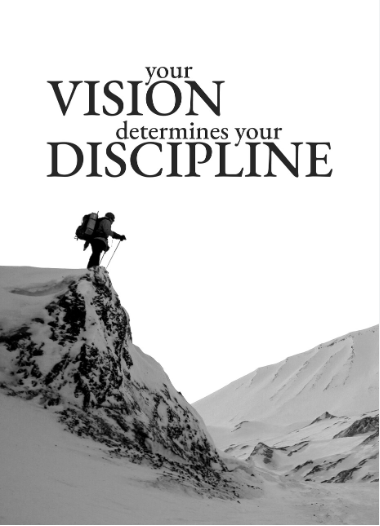
Vision is one of the most powerful forces in our lives. It enables us to see what is not yet visible and begin working towards making it visible.
Vision gives us a picture of a preferred future. A future that may be out of reach, but not out of sight.
It gives direction to our decisions, meaning to our work, and a reason to continue when the journey becomes difficult.
But having a vision is not the same as fulfilling it.
Vision must be discovered, understood, developed, and supported by discipline.
You may see where you want to go. The question is whether you are prepared to do what is required to get there.
1. Seeing the Invisible
Everything we build begins with something that does not yet exist in front of us.
Before a house is built, someone must first imagine what it could become.
Before a farmer harvests a field, there must be a decision to plant.
Before a person develops a skill, they must recognise the possibility of becoming capable of something they cannot yet do.
This is the power of vision.
It allows us to look beyond our present circumstances and begin preparing for a future that has not yet arrived.
"Now unto him that is able to do exceeding abundantly above all that we ask or think, according to the power that worketh in us."
EPHESIANS 3:20 — KJV
Paul reminds believers that God's power exceeds what we can ask or imagine.
This is not a promise that every personal ambition will automatically succeed.
It is a reminder that God's power is greater than our limitations.
Vision should therefore be approached with faith and humility, not with the belief that we control every outcome.
Vision allows you to see a future that may be out of reach, but not out of sight. Discipline determines what you do with what you see.
2. Vision Begins With Purpose
Vision is connected to purpose.
Before asking what you want to achieve, consider why you want to achieve it.
What are you trying to build?
Who will benefit from your work?
What responsibility are you prepared to carry?
Many people have ambitions. They want success, influence, recognition, or financial rewards.
But ambition and purpose are not always the same thing.
Ambition can be driven by what we want to receive.
Purpose asks what we are here to contribute.
"For we are his workmanship, created in Christ Jesus unto good works, which God hath before ordained that we should walk in them."
EPHESIANS 2:10 — KJV
Paul teaches that believers are created in Christ for good works.
Our abilities should not be developed only for our own benefit.
They can also become instruments through which we serve others.
A person who understands their purpose begins to recognise which opportunities support that purpose and which opportunities may distract from it.
Do not confuse what you want with what you were created to contribute. Vision becomes meaningful when it is connected to purpose.
3. Individual and Corporate Vision
There is individual vision and there is corporate vision.
Individual vision concerns the responsibility and direction a person recognises for their own life.
It may involve developing a trade, raising a family, serving a community, or using a particular gift.
Corporate vision extends beyond what one individual can accomplish.
It requires people to work together towards a shared purpose.
Think about the Apostle Paul.
He was called to proclaim the gospel among the Gentiles.
But Paul did not complete his missionary work alone.
He worked alongside companions such as Barnabas, Silas, Timothy, and many others.
Each person contributed to the work.
Jesus also gathered disciples, taught them, prepared them, and sent them to proclaim the good news of the Kingdom.
"For we are labourers together with God."
1 CORINTHIANS 3:9 — KJV
Think about that.
You may be the person who first recognises a need.
But recognising a need does not mean you possess every skill required to address it.
Some visions require teachers. Others require builders, planners, supporters, and people who can lead.
A corporate vision becomes stronger when people understand their responsibilities and contribute their abilities.
A vision may begin with one person, but its fulfilment may require many. Do not allow pride to prevent you from accepting help.
4. Vision Must Be Discovered
Vision is not always something another person can hand to you.
People can guide you. They can teach you. They can help you recognise your strengths and weaknesses.
But they cannot live your responsibilities for you.
You must take time to examine your abilities, your interests, your experiences, and the needs around you.
Sometimes the work you are called to do begins with recognising a problem that others have learned to ignore.
Sometimes it begins with a talent you have neglected.
And sometimes it becomes clearer through years of learning and service.
"If any of you lack wisdom, let him ask of God, that giveth to all men liberally."
JAMES 1:5 — KJV
Discovery requires humility.
You must be willing to ask questions and examine your direction.
You must also be willing to receive correction.
Not every strong desire is automatically a vision from God.
Our intentions and plans should be examined in the light of Scripture, wise counsel, and their consequences.
Before you chase a vision, understand its purpose. Before you claim it comes from God, be willing to test it.
5. Vision Comes in Phases
A vision may show you where you want to go without revealing every step required to get there.
Think about building a house.
You may have a clear picture of the completed building.
But you cannot begin by placing the roof on ground that has no foundation.
First comes planning.
Then the foundation.
Then the structure.
And only after the necessary work can the building begin to resemble the original vision.
The same applies to life.
You may want to become a leader, but first you must learn how to carry responsibility.
You may want to teach others, but first you must be willing to learn.
You may want to build something that benefits a community, but first you must understand the needs of that community.
"For precept must be upon precept, precept upon precept; line upon line, line upon line; here a little, and there a little."
ISAIAH 28:10 — KJV
Isaiah 28 uses this language in a context of rebuke, so it should not be treated as a direct promise about personal visions.
Nevertheless, the practical lesson of learning in stages is worth considering.
You cannot expect to master every responsibility in a single season.
Do not become frustrated because you cannot yet see the completed picture. Work faithfully on the phase in front of you.
6. The Discipline of Focus
Vision gives direction.
Discipline keeps you moving in that direction.
Without discipline, a person can spend years being busy without becoming effective.
Think about how easily we become distracted.
We begin one project, then abandon it because another opportunity appears more exciting.
We develop a goal, but continually change direction before giving ourselves enough time to make progress.
We compare our journey with the progress of others and forget why we began in the first place.
"Where there is no vision, the people perish: but he that keepeth the law, happy is he."
PROVERBS 29:18 — KJV
This proverb speaks about the absence of divine revelation and the importance of keeping God's instruction.
It is not simply a statement that everyone must have a personal career plan.
But it does challenge us to consider what happens when people live without guidance and disregard instruction.
Discipline requires boundaries.
You must learn when to say yes.
And you must learn when to say no.
Not every opportunity deserves your attention.
Not every distraction deserves your energy.
Vision narrows your focus. Discipline protects it. Stop measuring progress by how busy you are. Measure it by what your work is producing.
7. The Bird, the Horse, and the Fish
Imagine a bird spending its life trying to become a horse.
It may admire the strength of the horse.
It may admire how quickly the horse can run across the land.
But what happens if the bird spends all its time trying to run like a horse?
It may neglect the wings it was born with.
Now imagine a fish trying to fly like a bird.
The fish may admire the freedom of the sky.
But its natural abilities are suited to a different environment.
The lesson is not that every bird is unable to swim or that every fish is unable to move through the air.
Nature contains exceptions.
The lesson is that different creatures have different abilities and ways of living.
The same applies to us.
Some people are gifted in teaching.
Others are skilled in building, organising, creating, or caring for others.
You can develop new abilities. You can learn new trades. You can grow beyond your present limitations.
But do not spend your life imitating someone else while neglecting the abilities you already possess.
"Having then gifts differing according to the grace that is given to us."
ROMANS 12:6 — KJV
Paul reminds believers that people have different gifts.
These gifts can serve a shared purpose without requiring everyone to be identical.
Why spend your life trying to become something you are not, while neglecting the abilities you were given?
8. Vision Requires Testing
Having a vision does not mean the journey will be easy.
Every meaningful responsibility requires preparation.
A farmer must learn how to prepare the soil.
A builder must understand the strength of a foundation.
A leader must learn how to make decisions that affect other people.
Knowledge develops through learning.
Skills improve through practice.
Character can be refined through the way we respond to hardship.
"Knowing this, that the trying of your faith worketh patience."
JAMES 1:3 — KJV
James teaches that the testing of faith can produce endurance.
But we should not assume that every obstacle proves a particular ambition came from God.
Sometimes resistance is a reason to persevere.
Sometimes it is a reason to seek advice, change our approach, or reconsider the direction we are taking.
Wisdom helps us recognise the difference.
The purpose of discipline is not to suffer for the sake of suffering.
It is to develop the character and abilities needed to fulfil our responsibilities.
Do not confuse hardship with failure. But do not confuse stubbornness with faith. Learn from the test and respond with wisdom.
9. Dominion, Mastery, and Leadership
In Genesis, God gives humanity responsibility over creation.
"And let them have dominion over the fish of the sea, and over the fowl of the air, and over the cattle, and over all the earth."
GENESIS 1:26 — KJV
Dominion carries responsibility.
It should not become an excuse for destruction, exploitation, or controlling others.
Before you seek authority over others, learn to govern your own actions.
Learn to manage your time.
Learn to develop your abilities.
Learn to keep your commitments.
Learn to recognise when your decisions affect other people.
This is where discipline and mastery become important.
Mastery is not claiming to know everything.
It is the continued development of competence through learning, practice, and responsibility.
Think about Paul.
His ministry among the Gentiles required perseverance, cooperation, and sacrifice.
He experienced imprisonment, opposition, and hardship.
Yet he continued to proclaim the gospel.
Think about Jesus.
He remained focused on the mission given to Him.
He taught His disciples, served others, and demonstrated sacrificial love.
"For even the Son of man came not to be ministered unto, but to minister."
MARK 10:45 — KJV
Jesus demonstrates that true greatness is not measured simply by power or recognition.
Leadership also requires service.
Do not seek dominion while neglecting discipline. Learn to master your responsibilities before demanding authority over others.
10. The Treasure Hidden Within
Imagine if God wanted to hide something precious from you, but also wanted to ensure you could discover it.
Where would He place it?
Would He place it in a distant country?
Would He hide it behind the success of another person?
Or would He place the capacity to discover it within the life He has given you?
Think about the abilities you possess.
Some are obvious.
Others remain undeveloped because you have never taken the time to explore them.
Some abilities may only become visible when you accept new responsibilities.
Others develop through years of practice and experience.
This illustration reminds us to examine what has been entrusted to our care.
It is not a claim that every person has a hidden message they must somehow decode to know God's will.
Rather, it challenges us to stop neglecting the opportunities and abilities already before us.
"But we have this treasure in earthen vessels, that the excellency of the power may be of God, and not of us."
2 CORINTHIANS 4:7 — KJV
In this passage, Paul speaks about the treasure of the gospel carried by fragile human messengers.
It is not a direct statement about discovering a personal career vision.
But it reminds us that human weakness does not prevent God from working through ordinary people.
You do not need to become someone else before you begin taking responsibility for your own life.
Begin with what you have.
Develop what you can.
Seek wisdom for what you do not understand.
And remain willing to grow.
Stop spending your life searching for another person's purpose. Examine your own abilities, develop your character, and begin doing the work before you.
Final Reflection
Vision is the ability to see beyond your present circumstances.
It allows you to imagine a future that is not yet visible.
But vision alone does not build the future.
Discipline is required.
You must be willing to learn, develop your abilities, and accept responsibility.
You must understand the difference between individual vision and the work that requires a collective effort.
You must learn to recognise the seasons and phases of your journey.
And you must develop the wisdom to know which opportunities deserve your attention.
Think about the bird trying to become a horse.
What is the purpose of having wings if you spend your entire life trying to run like something else?
Learn to recognise the abilities you have been given.
Develop them through discipline.
Use them with humility and responsibility.
Do not mistake every difficulty for a sign that you should quit.
But do not assume every challenge means you must continue unchanged.
Seek wisdom.
Examine your direction.
Remain open to correction.
And remember that meaningful work is not measured only by recognition, position, or wealth.
It can also be measured by the people who benefit from what you do.
Vision is not about being busy. It is about being effective.
Do not simply admire the future you can see. Develop the discipline required to work towards it.