
ONE GOD AFRICA · KINGDOM WISDOM
The Wisdom of the Ant
Small in stature. Strong in unity. Wise in preparation.
The ant is small, yet there is much we can learn from its way of life.
It moves with purpose. It works with discipline. It prepares for changing conditions.
Its strength is not found in its size, but in the way it works, communicates, and cooperates with others.
God uses this small creature to teach us something about wisdom.
Do not overlook something simply because it appears small. Sometimes the greatest lessons are found in the things we pay the least attention to.
1. Go to the Ant and Be Wise
"Go to the ant, thou sluggard; consider her ways, and be wise: Which having no guide, overseer, or ruler, provideth her meat in the summer, and gathereth her food in the harvest."
PROVERBS 6:6–8 — KJV
Think about that.
God tells us to observe one of the smallest creatures on earth and learn from it.
Why the ant?
Because wisdom is not always found in what appears powerful.
Sometimes wisdom is found in discipline, consistency, and preparation.
The ant does not need someone standing over it every moment before it begins working.
Ant colonies have organised roles and communicate through chemical signals and other cues.
But they do not have a commander issuing instructions to every worker.
Their cooperation is built into the way the colony functions.
Now consider your own life.
Must someone continually remind you of your responsibilities?
Must someone stand over you before you do what needs to be done?
Or have you developed the discipline to take responsibility for yourself?
Wisdom begins when you learn to take responsibility without always needing someone to tell you what to do.
2. Strength Is Not Measured by Size
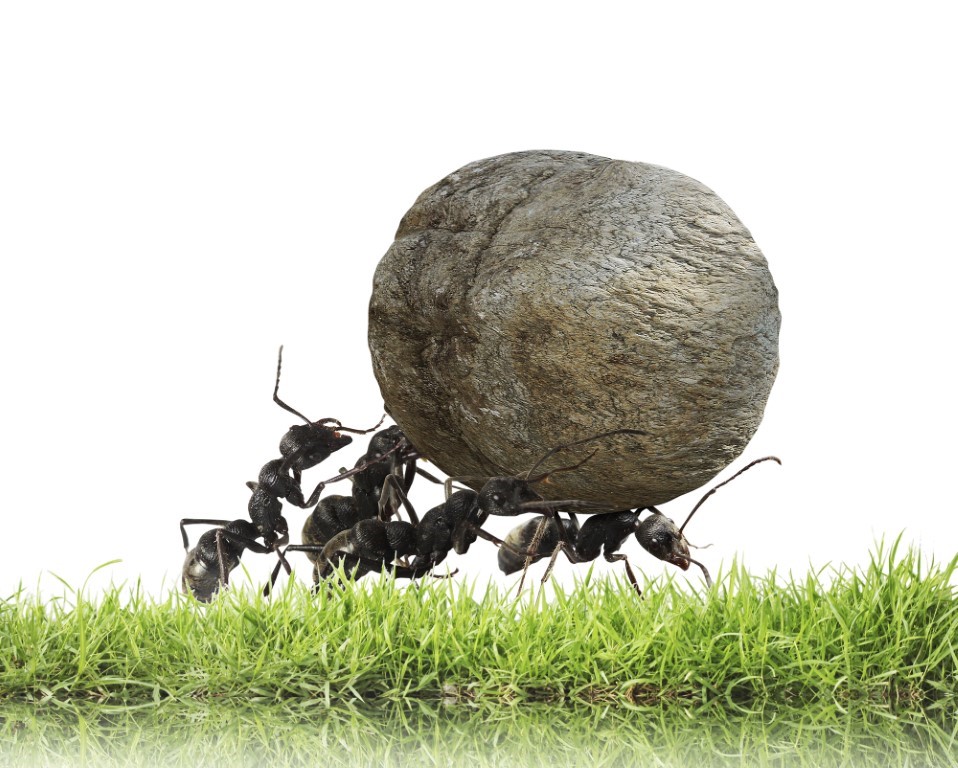
The ant is small in stature.
Yet it can carry objects that are heavy relative to its own body.
Its size does not tell the full story of its abilities.
The same applies to us.
Do not measure someone's value only by their appearance, position, or wealth.
Someone may appear ordinary but carry remarkable wisdom.
Someone may have little influence in the eyes of the world but make a meaningful difference in their community.
Someone may not hold an important title, yet their work may support an entire family.
"For the Lord seeth not as man seeth; for man looketh on the outward appearance, but the Lord looketh on the heart."
1 SAMUEL 16:7 — KJV
The world often measures people by what they possess.
But character, integrity, and responsibility cannot always be measured by outward appearance.
Never underestimate someone because they appear small. Strength is not always visible from the outside.
3. Preparation Is an Act of Faith
The ant gathers food when conditions allow.
It does not wait until resources become scarce before making use of what is available.
Proverbs uses this behaviour to teach the importance of foresight.
Preparation is not necessarily a sign of fear.
It can be a sign of wisdom.
Think about a farmer.
He does not wait until he becomes hungry before deciding to plant.
He prepares the soil.
He plants the seed.
He cares for what he has planted.
And he waits for the season of harvest.
The same applies to our lives.
If you want to become skilled, begin learning.
If you want to provide for your family, develop responsible financial habits.
If you want to become wiser, spend time developing your understanding.
"The plans of the diligent lead surely to plenty; but those of every one that is hasty only to want."
PROVERBS 21:5 — KJV
Planning does not guarantee that every outcome will happen exactly as expected.
But preparation allows us to respond more responsibly to the opportunities before us.
Preparation is one of the practical expressions of faith. Trust God, but do not neglect the responsibilities placed in your hands.
4. Understand the Seasons
The ant teaches us the importance of recognising changing conditions.
Some seasons provide opportunities to gather.
Other seasons require conserving resources and adapting.
Different ant species respond to seasons in different ways.
Some store food, while others reduce activity when conditions become difficult.
The lesson remains valuable.
Learn to recognise the season you are in.
"To every thing there is a season, and a time to every purpose under the heaven."
ECCLESIASTES 3:1 — KJV
There is a time to sow.
A time to cultivate.
A time to harvest.
And a time to rest.
But what happens when you spend your season of preparation doing nothing?
What happens when an opportunity arrives and you have not developed the skills needed to use it?
What happens when difficult circumstances arrive and you have never prepared for uncertainty?
We cannot predict every season of our lives.
But we can develop habits that help us respond with wisdom.
Do not wait for winter before thinking about preparation. Use the season you have to prepare for the responsibilities ahead.
5. When the Path Is Broken, Redirect
Watch a trail of ants moving towards food.
Their movement often follows chemical trails that help guide others.
But what happens when an obstacle interrupts the path?
The ants may begin searching for another route.
Through their movement and communication, a new path may develop.
Think about your own life.
What happens when your plans are interrupted?
What happens when an opportunity disappears?
What happens when the direction you were following is no longer possible?
Do you immediately give up?
Or do you examine your circumstances and look for another responsible way forward?
"A man's heart deviseth his way: but the Lord directeth his steps."
PROVERBS 16:9 — KJV
Having a plan is important.
But wisdom also requires recognising when that plan needs to change.
Changing direction does not always mean abandoning your purpose.
Sometimes it means finding a better way to reach it.
When your path is broken, do not immediately abandon your purpose. Examine the obstacle, seek wisdom, and find another way forward.
6. One Body, Many Parts, One Purpose
A colony of ants functions through cooperation.
Different ants perform different roles that contribute to the survival of the colony.
Some gather food.
Some care for the young.
Some defend the colony.
The work is not identical, but it contributes to a shared outcome.
The same principle can teach us something about community.
Not everyone has the same gifts.
Not everyone has the same abilities.
Not everyone carries the same responsibilities.
But that does not mean one person's contribution is automatically more valuable than another's.
"For as the body is one, and hath many members, and all the members of that one body, being many, are one body."
1 CORINTHIANS 12:12 — KJV
Paul uses the human body to describe the unity of believers.
Each member has a role to play.
Each contribution matters.
Imagine a community where everyone wants to lead, but nobody wants to serve.
Imagine a family where everyone wants to receive, but nobody wants to contribute.
Imagine a team where everyone wants recognition, but nobody wants responsibility.
How long would that community, family, or team remain strong?
Unity does not require everyone to perform the same role. It requires people to understand their responsibilities and contribute towards a shared purpose.
7. Carry One Another's Burdens
Ant colonies depend on cooperation for survival.
Workers gather resources, maintain the nest, and respond to threats.
Their behaviour is driven by biological instincts, not human moral choices.
But their cooperation offers us an illustration of shared responsibility.
Human beings have the ability to choose whether to help one another.
And Scripture teaches us to show love through our actions.
"Greater love hath no man than this, that a man lay down his life for his friends."
JOHN 15:13 — KJV
Jesus teaches about sacrificial love.
That love should be visible in how we treat others.
We should not only think about what we can receive.
We should also think about what we can contribute.
Sometimes helping someone means sharing food.
Sometimes it means sharing knowledge.
Sometimes it means giving someone an opportunity.
Sometimes it means standing beside someone during a difficult season.
"Bear ye one another's burdens, and so fulfil the law of Christ."
GALATIANS 6:2 — KJV
But helping others does not mean ignoring your own limitations or allowing yourself to be harmed.
Wisdom requires love and responsibility together.
Do not live only for what you can receive. Use what you have to help carry the burdens of others.
8. Work Without Waiting for Applause
The ant does not need applause before doing its work.
It does not wait for recognition before contributing to the colony.
Its work is part of the way it survives.
Now consider your own life.
Do you only work hard when someone is watching?
Do you only help others when there is something to gain?
Do you only take responsibility when you expect recognition?
There is nothing wrong with being appreciated for your work.
People should be treated fairly and recognised for their contributions.
But our integrity should not disappear when nobody is watching.
"And whatsoever ye do, do it heartily, as to the Lord, and not unto men."
COLOSSIANS 3:23 — KJV
Work with purpose.
Work with integrity.
And let the quality of your work speak for itself.
Do not allow the absence of recognition to become an excuse for abandoning your integrity.
9. Humility, Stewardship and Responsibility
The ant teaches us that strength is not always found in stature.
Its ability to contribute comes through the role it performs within the colony.
There is a lesson about humility in this.
Do not believe that your contribution is only valuable when others can see it.
Some of the most important work happens quietly.
Parents caring for children.
People supporting their families.
Workers maintaining essential services.
Individuals sharing knowledge with those who need guidance.
These contributions may not attract attention.
But they can make an important difference.
"He that is faithful in that which is least is faithful also in much."
LUKE 16:10 — KJV
Stewardship means taking responsibility for what has been entrusted to us.
Whether that responsibility appears large or small.
Do not neglect what is in your hands because you are waiting for something greater.
Sometimes the way you handle small responsibilities reveals your readiness for larger ones.
Humility is not believing that you have nothing valuable to offer. It is understanding that your gifts and responsibilities should be used to serve.
10. Build Something Greater Than Yourself
Think about everything we can learn from the ant.
It works with purpose.
It responds to changing conditions.
It contributes to a larger system.
And its work supports the survival of the colony.
Now consider your own responsibilities.
What are you building?
Are you developing skills that can help others?
Are you building a foundation for your family?
Are you contributing something meaningful to your community?
Or are you only focused on what you can receive for yourself?
"Let no man seek his own, but every man another's wealth."
1 CORINTHIANS 10:24 — KJV
In this verse, the word translated as "wealth" refers to another person's good or welfare.
Paul teaches believers not to think only about their own interests.
We should also consider the well-being of others.
Imagine what a community could become if more people took responsibility for contributing to its future.
Imagine if people shared their knowledge instead of keeping it to themselves.
Imagine if those with opportunities helped others develop their abilities.
Imagine if each generation worked to create a stronger foundation for the next.
That is a lesson worth learning from something as small as an ant.
Do not spend your entire life building only for yourself. Let your work become part of something that benefits others.
Final Reflection
Go to the ant.
Consider its ways.
And be wise.
Do not overlook the lessons found in small things.
The ant teaches us about discipline, preparation, cooperation, and responsibility.
It reminds us to make use of the opportunities before us.
To prepare for changing seasons.
To find another way when our path is interrupted.
To contribute towards something greater than ourselves.
And to recognise that our strength is not always measured by what others can see.
Preparation is not the absence of faith. It can be an expression of faith.
Unity is not about everyone being the same. It is about working together with shared responsibility and purpose.
Humility is not weakness. It is understanding the value of serving without always seeking attention.
So let us go to the ant.
Not simply to imitate its labour.
But to learn from the wisdom illustrated by its way of life.
Be disciplined. Be prepared. Be humble. Remain united in purpose.
And let your contribution, however small it may appear, become part of something greater than yourself.