
ONE GOD AFRICA · KINGDOM WISDOM
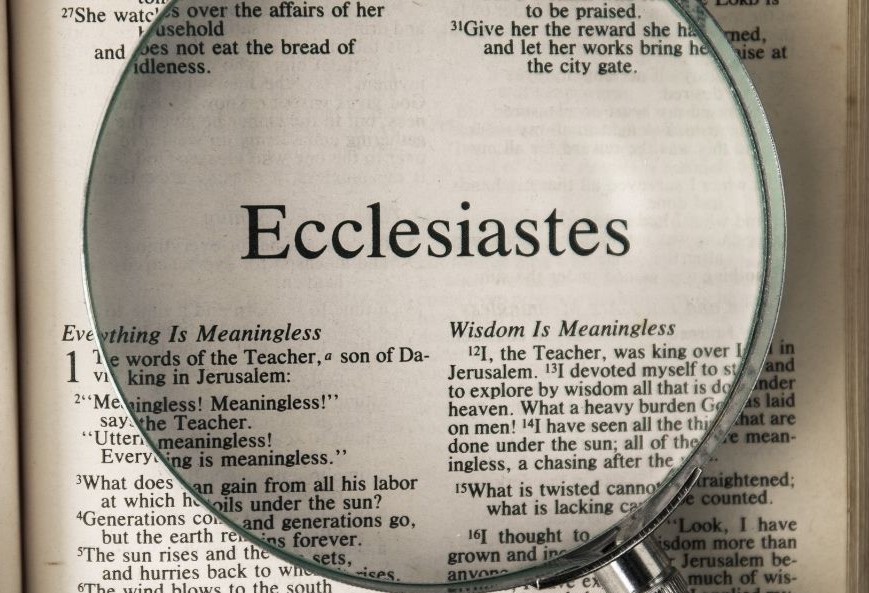
Ecclesiastes
Life, wisdom, work, wealth, and the passing of time. Understanding what truly matters under the sun.
Brothers and sisters, let us take time to understand the book of Ecclesiastes.
This book speaks honestly about some of life's biggest questions.
Why do we work so hard?
Why do we chase success?
Why do we desire wealth, recognition, and possessions?
Why do some people have everything yet still feel empty?
And why does life sometimes seem unfair, even to those who try to do what is right?
Ecclesiastes does not avoid these questions.
It confronts them.
It is like listening to someone who has experienced the pleasures, frustrations, achievements, and disappointments of life, only to ask whether any of it can provide lasting meaning.
The book introduces its speaker as the Teacher, a son of David and king in Jerusalem.
Throughout the teaching, he examines life "under the sun" — the world as human beings experience it, with all its limitations.
He looks at wisdom.
Work.
Wealth.
Pleasure.
Justice.
Relationships.
Time.
And death.
Again and again, he returns to the same question.
What do we truly gain from everything we spend our lives pursuing?
The word often translated as "meaningless" also carries the image of a breath or vapour — something temporary, difficult to grasp, and quickly passing away.
That distinction is important.
The Teacher is not simply saying that nothing matters.
He is asking us to recognise how little control we have over the things we often treat as permanent.
So let us examine the wisdom of Ecclesiastes and consider what it teaches us about the lives we are living today.
1. Everything Is Meaningless
The Teacher begins with a statement that immediately challenges the way we understand life.
"Vanity of vanities, saith the Preacher, vanity of vanities; all is vanity."
ECCLESIASTES 1:2 — KJV
Meaningless.
Temporary.
Like chasing the wind.
But why would the Teacher begin this way?
Look at the world around you.
Generations come and go.
The sun rises.
The sun sets.
The wind changes direction.
Rivers continue flowing into the sea.
And the earth continues through its seasons.
People are born.
People grow older.
People die.
And another generation takes their place.
Now ask yourself.
How many people lived before us whose names we will never know?
How many people worked their entire lives building something that no longer exists?
How many people believed their achievements would never be forgotten?
Yet time continued.
And eventually, the world moved on.
The Teacher observes that human desires also seem endless.
"The eye is not satisfied with seeing, nor the ear filled with hearing."
ECCLESIASTES 1:8 — KJV
Think about that.
We see something we want.
We work to obtain it.
We finally receive it.
And then we begin wanting something else.
A bigger house.
A better vehicle.
A higher position.
More money.
More recognition.
More possessions.
But when does more become enough?
The Teacher is asking us to recognise a cycle.
Human desires can continue long after our actual needs have been met.
And when we build our purpose entirely around satisfying those desires, we may spend our whole lives chasing something that never truly satisfies us.
Before you spend your life chasing what you do not have, ask yourself whether the things you already possess have taught you how to be content.
2. Wisdom, Pleasure, and Hard Work
The Teacher turns his attention to wisdom.
He studies.
He observes.
He seeks understanding.
And he discovers something uncomfortable.
"For in much wisdom is much grief: and he that increaseth knowledge increaseth sorrow."
ECCLESIASTES 1:18 — KJV
Why would increasing knowledge also increase sorrow?
Consider what happens when you begin understanding the world more deeply.
You recognise injustice.
You see corruption.
You notice suffering.
You understand how people manipulate one another.
And you begin recognising problems you previously did not understand.
Knowledge opens your eyes.
But knowledge does not automatically give you the power to change everything you see.
That can become a burden.
So the Teacher explores another possibility.
Perhaps pleasure will provide the satisfaction that knowledge cannot.
He builds houses.
Plants vineyards.
Creates gardens.
Accumulates livestock.
Collects silver and gold.
Surrounds himself with entertainment and luxury.
And denies himself very little of what he desires.
Yet after examining everything he has accomplished, he reaches another difficult conclusion.
"Then I looked on all the works that my hands had wrought, and on the labour that I had laboured to do: and, behold, all was vanity and vexation of spirit."
ECCLESIASTES 2:11 — KJV
Now think about your own ambitions.
What are you working toward?
And what do you believe will happen when you finally achieve it?
Will the promotion make you permanently happy?
Will the bigger house remove every worry?
Will financial success eliminate every problem?
Will recognition from others give you lasting peace?
The Teacher is not saying that achievement is wrong.
He is showing us that achievement alone cannot answer every question of life.
He then considers hard work.
A person can spend decades building wealth.
Working long hours.
Making sacrifices.
Developing knowledge and skills.
And eventually, everything they worked for will pass into someone else's hands.
But will that person manage it wisely?
Will they value the sacrifices made?
Will they preserve what was built?
Or will they waste it?
The person who worked so hard cannot control what happens forever.
That is the frustration the Teacher describes.
And yet he recognises something good.
"There is nothing better for a man, than that he should eat and drink, and that he should make his soul enjoy good in his labour. This also I saw, that it was from the hand of God."
ECCLESIASTES 2:24 — KJV
Work has value.
Wisdom has value.
And enjoyment has value.
But perhaps we should stop treating these things as though they can provide everything our souls need.
Work hard. Develop wisdom. Build something meaningful. But do not become so consumed by what you are building that you forget to enjoy the life God has given you.
3. A Time for Everything
One of the most recognised teachings in Ecclesiastes concerns the seasons of life.
"To every thing there is a season, and a time to every purpose under the heaven."
ECCLESIASTES 3:1 — KJV
Now consider the different seasons we experience.
These are the contrasting experiences described in Ecclesiastes 3:2–8.
Now think about your own life.
Have you experienced a season where everything seemed to be going well?
And another where nothing appeared to work in your favour?
Have you experienced joy followed by sorrow?
Growth followed by loss?
Success followed by disappointment?
Or a season of waiting when you desperately wanted something to change?
Life does not remain in one condition forever.
Seasons change.
People change.
Circumstances change.
And sometimes the things we resist are the very realities we must learn to navigate.
But notice something important.
The Teacher does not claim that every event is good simply because it occurs.
He acknowledges suffering, injustice, and death.
His message is that human life unfolds within times and seasons we cannot fully control.
"He hath made every thing beautiful in his time: also he hath set the world in their heart, so that no man can find out the work that God maketh from the beginning to the end."
ECCLESIASTES 3:11 — KJV
We want answers.
We want certainty.
We want to understand why things happen.
But we do not see everything from beginning to end.
That is part of being human.
The Teacher also reminds us that life is temporary.
We come from dust.
And our bodies return to dust.
Yet while we are alive, we have opportunities to do good, enjoy the fruits of honest labour, and recognise the gifts God has provided.
You cannot control every season of your life. But you can seek wisdom in how you respond to the season you are living through.
4. Oppression and Loneliness
The Teacher now looks beyond personal achievement.
He looks at society.
And what does he see?
Oppression.
People suffering.
Those with power mistreating those without it.
And people crying without anyone to comfort them.
"So I returned, and considered all the oppressions that are done under the sun: and behold the tears of such as were oppressed, and they had no comforter."
ECCLESIASTES 4:1 — KJV
Now ask yourself.
How much has truly changed?
We have more technology.
More institutions.
More knowledge.
And more systems than previous generations could have imagined.
Yet oppression still exists.
Poverty still exists.
Injustice still exists.
And people still suffer while others benefit from their hardship.
The Teacher also notices another problem.
Envy.
People working hard because they are comparing themselves with others.
One person succeeds.
Another wants to surpass them.
One person acquires something.
Another believes they must acquire more.
And the cycle continues.
But where does it end?
"Better is an handful with quietness, than both the hands full with travail and vexation of spirit."
ECCLESIASTES 4:6 — KJV
Consider that statement.
Is it better to have everything and live without peace?
Or to have enough and experience contentment?
The Teacher then describes a man who works endlessly.
He has no child.
No brother.
No one with whom to share his achievements.
Yet he continues working.
His eyes are never satisfied with wealth.
And eventually, he asks a question that should make all of us reflect.
For whom am I working so hard?
That question matters.
Because what is the value of building a life if we neglect the relationships that make life meaningful?
Ecclesiastes then reminds us of the strength found in companionship.
"Two are better than one; because they have a good reward for their labour."
ECCLESIASTES 4:9 — KJV
"And if one prevail against him, two shall withstand him; and a threefold cord is not quickly broken."
ECCLESIASTES 4:12 — KJV
We need one another.
Families.
Friends.
Communities.
People willing to help us when we fall.
People willing to share our burdens.
And people who remind us that life is not meant to be lived entirely alone.
Do not spend your life building wealth while neglecting the people you are building it for. Success without meaningful relationships can become another form of poverty.
5. Promises, Wealth, and Contentment
The Teacher now turns toward our relationship with God.
He warns us to approach God with humility.
To listen carefully.
To avoid speaking carelessly.
And to understand the seriousness of making promises.
"Be not rash with thy mouth, and let not thine heart be hasty to utter any thing before God: for God is in heaven, and thou upon earth: therefore let thy words be few."
ECCLESIASTES 5:2 — KJV
Now think about how easily people make promises.
We promise to change.
We promise to help.
We promise to give.
We promise to do better.
And sometimes we make promises to God when we desperately want something from Him.
But what happens after we receive what we asked for?
Do we remember our promises?
Do we honour our words?
Or do we simply move on?
"Better is it that thou shouldest not vow, than that thou shouldest vow and not pay."
ECCLESIASTES 5:5 — KJV
The lesson is simple.
Let your words carry responsibility.
Do not speak merely to impress others.
And do not make promises you have no intention of keeping.
The Teacher then returns to wealth.
He observes that people who love money are rarely satisfied with what they have.
"He that loveth silver shall not be satisfied with silver; nor he that loveth abundance with increase: this is also vanity."
ECCLESIASTES 5:10 — KJV
Now consider the person who spends their entire life pursuing wealth.
They earn more.
Then spend more.
They acquire more possessions.
Then worry about losing them.
They increase their responsibilities.
And sometimes lose the ability to rest.
Meanwhile, the person who works honestly and lives within their means may sleep peacefully.
That is one of the Teacher's observations.
Wealth can provide comfort.
But it cannot guarantee peace.
It cannot guarantee health.
It cannot guarantee relationships.
And it cannot guarantee tomorrow.
We enter the world with nothing.
And we cannot take our possessions with us when we die.
Yet the Teacher does not condemn every form of wealth.
He recognises that receiving resources and having the ability to enjoy them can be a gift from God.
The problem is not simply possessing something.
The problem is becoming possessed by it.
Keep your promises. Work honestly. Receive what God has provided with gratitude. But never allow the pursuit of wealth to become more important than the life you have been given.
6. Wisdom and the Reality of Life
The Teacher continues examining wealth and satisfaction.
He describes a person who receives riches, possessions, and honour.
They appear to have everything.
Yet they cannot enjoy what they possess.
Now ask yourself.
What is the purpose of abundance if you have no peace?
What is the value of possessions if you cannot enjoy them?
And what is the value of living many years if those years are consumed entirely by dissatisfaction?
The Teacher then turns toward wisdom.
He makes an observation that may initially seem strange.
"A good name is better than precious ointment; and the day of death than the day of one's birth."
ECCLESIASTES 7:1 — KJV
Why would he speak about death in this way?
Because death reminds the living that life is temporary.
It forces us to consider how we are spending our time.
What will people remember about us?
Our possessions?
Our titles?
Our achievements?
Or the way we treated them?
The Teacher explains that sorrow can sometimes teach us lessons that entertainment cannot.
When everything is going well, we may avoid difficult questions.
But hardship can reveal our priorities.
Loss can teach us gratitude.
And disappointment can expose the things we were depending upon.
This does not mean suffering is always good.
It means wisdom can emerge when we reflect honestly upon life's difficulties.
He also warns against pride and impatience.
"Better is the end of a thing than the beginning thereof: and the patient in spirit is better than the proud in spirit."
ECCLESIASTES 7:8 — KJV
Think about that.
Anyone can begin something.
But can you finish it?
Anyone can make a promise.
But can you fulfil it?
Anyone can speak confidently.
But can you remain humble enough to learn?
The Teacher also warns us against romanticising the past.
How often do we hear people say that everything was better before?
But were those times truly better?
Or are we remembering only the parts we enjoyed?
Wisdom requires us to examine life honestly.
Not merely according to our emotions.
And not merely according to our preferences.
He also acknowledges that righteous people sometimes suffer while wicked people appear to prosper.
This challenges the idea that every good decision produces an immediate reward.
Life is not always that simple.
And the Teacher refuses to pretend otherwise.
"For there is not a just man upon earth, that doeth good, and sinneth not."
ECCLESIASTES 7:20 — KJV
We all need wisdom.
We all make mistakes.
And none of us understands everything.
Wisdom is not pretending that life is always fair. Wisdom is learning to remain humble, patient, and responsible even when life does not unfold as expected.
7. Authority, Justice, and Destiny
The Teacher now examines authority.
Kings.
Rulers.
Those who hold power.
And those who must live under their decisions.
He encourages wisdom when dealing with authority.
To understand the right time to act.
To recognise consequences.
And to avoid careless decisions.
But he also acknowledges that authority can be misused.
Power does not automatically produce wisdom.
And a position of leadership does not automatically make someone righteous.
Now consider our own societies.
We establish laws.
We appoint leaders.
We create institutions.
And we expect those institutions to uphold justice.
But what happens when justice is delayed?
"Because sentence against an evil work is not executed speedily, therefore the heart of the sons of men is fully set in them to do evil."
ECCLESIASTES 8:11 — KJV
When wrongdoing carries no visible consequence, people may become more willing to repeat it.
That is the danger the Teacher identifies.
Yet he also recognises something that troubles many of us.
Sometimes righteous people suffer consequences we would expect the wicked to receive.
And sometimes wicked people enjoy outcomes we would expect the righteous to receive.
How do we explain that?
Why does someone who works honestly struggle?
Why does someone who exploits others sometimes prosper?
Why do good people experience suffering?
And why does justice sometimes take so long?
The Teacher does not offer a simple answer to every injustice.
He recognises the limitations of human understanding.
Even wise people cannot fully comprehend everything God permits or does.
Then he turns toward something all human beings share.
Mortality.
Rich and poor.
Wise and foolish.
Powerful and powerless.
Everyone faces death.
Our positions do not exempt us.
Our possessions do not exempt us.
And our achievements do not exempt us.
But while we are alive, we still have opportunities.
To love.
To work.
To learn.
To serve.
And to enjoy the good things God has provided.
The Teacher encourages us not to waste those opportunities.
Power does not make a person wise, and wealth does not make a person righteous. Remember that every human life has limits, and use the time you have to pursue what is good.
8. Wisdom Over Strength
The Teacher makes another important observation.
Life does not always reward the person we expect.
"The race is not to the swift, nor the battle to the strong, neither yet bread to the wise, nor yet riches to men of understanding."
ECCLESIASTES 9:11 — KJV
Think about that.
The fastest person does not always win.
The strongest person does not always succeed.
The wisest person does not always become wealthy.
And the most capable person does not always receive recognition.
Time and unexpected circumstances affect us all.
Now consider the story the Teacher shares.
There was a small city.
It had few people.
A powerful king came against it.
He surrounded the city and prepared to attack.
But within that city was a poor man who possessed wisdom.
Through his wisdom, the city was delivered.
Yet afterward, no one remembered the poor man.
Why?
Perhaps because he lacked status.
Perhaps because he lacked wealth.
Perhaps because people valued the position of the powerful more than the wisdom of the poor.
Whatever the reason, the Teacher draws a conclusion.
"Then said I, Wisdom is better than strength: nevertheless the poor man's wisdom is despised, and his words are not heard."
ECCLESIASTES 9:16 — KJV
Now ask yourself.
How often do we judge people according to their titles?
Their wealth?
Their appearance?
Their education?
Or the position they hold?
And how often do we overlook wisdom because it comes from someone we consider unimportant?
The Teacher reminds us that wisdom can accomplish what physical strength cannot.
But wisdom also requires humility from those who receive it.
A foolish leader may speak loudly.
A wise person may speak quietly.
Yet the volume of someone's voice does not determine the value of their words.
The Teacher also warns that a small amount of foolishness can damage a great deal of good.
One careless decision.
One reckless statement.
One act of dishonesty.
Or one moment of pride.
These things can damage what took years to build.
That is why wisdom matters.
Do not confuse authority with wisdom, confidence with competence, or wealth with understanding. Sometimes the person with the least recognition carries the wisdom everyone else needs.
9. Work, Risk, and Investment
The Teacher now turns toward practical wisdom.
He examines work.
Leadership.
Preparation.
Risk.
And the decisions people make when they cannot predict the future.
Consider someone cutting wood with a blunt axe.
They may work harder and harder.
Use more strength.
Spend more time.
And become increasingly exhausted.
But what if they stopped to sharpen the axe?
"If the iron be blunt, and he do not whet the edge, then must he put to more strength: but wisdom is profitable to direct."
ECCLESIASTES 10:10 — KJV
Now think about your own work.
Are you constantly working harder?
Or are you also learning how to work more wisely?
Are you developing your skills?
Improving your understanding?
And preparing yourself for the responsibilities you carry?
Effort matters.
But effort without wisdom can become unnecessary struggle.
The Teacher also warns against laziness.
A neglected house eventually begins to deteriorate.
Small problems become larger problems.
And responsibilities that are continually ignored eventually create consequences.
He then speaks about investment and uncertainty.
"Give a portion to seven, and also to eight; for thou knowest not what evil shall be upon the earth."
ECCLESIASTES 11:2 — KJV
There is wisdom in not depending entirely upon one uncertain outcome.
But he also warns us against waiting forever for perfect conditions.
"He that observeth the wind shall not sow; and he that regardeth the clouds shall not reap."
ECCLESIASTES 11:4 — KJV
Think about that.
If a farmer waits until there is absolutely no risk, when will the farmer plant?
If you wait until every uncertainty disappears, when will you begin?
When will you learn?
When will you build?
When will you take responsibility?
Life does not provide complete certainty.
And wisdom does not mean knowing everything that will happen.
Sometimes wisdom means preparing carefully and then acting responsibly despite uncertainty.
The Teacher encourages people to continue sowing because they cannot know which effort will succeed.
Some work may produce little.
Some may produce much.
And sometimes unexpected opportunities emerge from faithful effort.
But nothing grows if nothing is planted.
Prepare wisely. Develop your skills. Manage your risks. But do not allow uncertainty to become an excuse for doing nothing. You cannot harvest what you refuse to plant.
10. Remember Your Creator
As Ecclesiastes approaches its conclusion, the Teacher speaks directly to the young.
Enjoy your youth.
Appreciate your strength.
Recognise the opportunities before you.
But remember that your choices carry responsibility.
And remember that youth does not last forever.
"Remember now thy Creator in the days of thy youth, while the evil days come not, nor the years draw nigh, when thou shalt say, I have no pleasure in them."
ECCLESIASTES 12:1 — KJV
Now think about that.
When you are young, you may believe you have unlimited time.
Time to learn.
Time to change.
Time to build.
Time to repair relationships.
And time to develop a closer relationship with God.
But the Teacher reminds us that time continues moving.
Our bodies change.
Our strength changes.
Our responsibilities change.
And eventually, the abilities we once took for granted begin to fade.
Ecclesiastes uses powerful images to describe the effects of ageing.
Strong men stooping.
Eyes growing dim.
The sounds of daily activity becoming faint.
And the body gradually losing its strength.
These images remind us that physical life is temporary.
So why wait until the end of life to consider what matters?
Why wait until our strength fades before recognising the value of our time?
Why wait until we lose something before learning to appreciate it?
And why wait until our final years to seek the One who gave us life?
The Teacher reminds us of our mortality.
"Then shall the dust return to the earth as it was: and the spirit shall return unto God who gave it."
ECCLESIASTES 12:7 — KJV
We came into this world without possessions.
We spend our lives learning, working, building, and pursuing different things.
And eventually, our earthly lives come to an end.
So what remains?
What was the purpose of it all?
The Teacher has examined wealth.
Pleasure.
Knowledge.
Wisdom.
Hard work.
Leadership.
Justice.
And the passing of time.
After everything he has observed, he gives his final conclusion.
"Let us hear the conclusion of the whole matter: Fear God, and keep his commandments: for this is the whole duty of man."
ECCLESIASTES 12:13 — KJV
There it is.
After all the questions.
After all the achievements.
After all the disappointments.
After all the wisdom gathered through life.
The Teacher returns to God.
Not wealth.
Not status.
Not possessions.
Not recognition.
But reverence for God and obedience to His commandments.
Do not wait until your life is almost over to remember your Creator. Seek wisdom while you have time, and let your relationship with God shape the life you are living today.
Final Reflection
Brothers and sisters, take time to understand what Ecclesiastes is teaching us.
Life is temporary.
Our strength is temporary.
Our possessions are temporary.
Our positions are temporary.
And even the achievements we spend our lives pursuing may eventually be forgotten.
Now consider the questions the Teacher has placed before us.
Why do we work so hard?
Why do we chase wealth?
Why do we compare ourselves with others?
Why do we desire more even after receiving what we once prayed for?
And why do we sometimes neglect the people around us while pursuing things that cannot last forever?
The Teacher has shown us that knowledge does not eliminate sorrow.
Wealth does not guarantee peace.
Power does not guarantee wisdom.
Hard work does not guarantee recognition.
And righteousness does not mean we will never experience hardship.
But Ecclesiastes does not leave us without direction.
It teaches us to recognise the gifts already present in our lives.
The opportunity to work.
The ability to learn.
The joy of relationships.
The blessing of companionship.
The value of wisdom.
And the responsibility to do good while we are alive.
There is a time for everything.
A time to begin.
A time to finish.
A time to build.
A time to rest.
A time to speak.
And a time to listen.
But through every season, remember your Creator.
Do not allow ambition to make you forget your family.
Do not allow wealth to become your identity.
Do not allow pride to prevent you from learning.
Do not allow hardship to convince you that your life has no value.
And do not spend your entire life waiting for happiness to arrive through the next achievement.
Enjoy the life God has given you, and use it responsibly.
Work with purpose.
Seek wisdom.
Care for others.
Honour your commitments.
Be grateful for what you have.
And remember that you cannot control everything that happens under the sun.
Now let us return to the Teacher's final words.
"Let us hear the conclusion of the whole matter: Fear God, and keep his commandments: for this is the whole duty of man."
ECCLESIASTES 12:13 — KJV
That is the conclusion.
After everything we pursue.
After everything we achieve.
After everything we gain and lose.
Fear God and keep His commandments.
Not merely because life is short.
But because our lives carry responsibility before the One who created us.
And Ecclesiastes closes by reminding us that God will bring every deed into judgment, including what is hidden.
So let us live with wisdom.
Let us live with humility.
Let us live with gratitude.
And let us remember God in every season of our lives.
Amen.