
ONE GOD AFRICA · KINGDOM WISDOM
Footprints in the Sand
From the promises of the Messiah to the footsteps we follow today
The Promise of Footprints - Prophecies of the Messiah
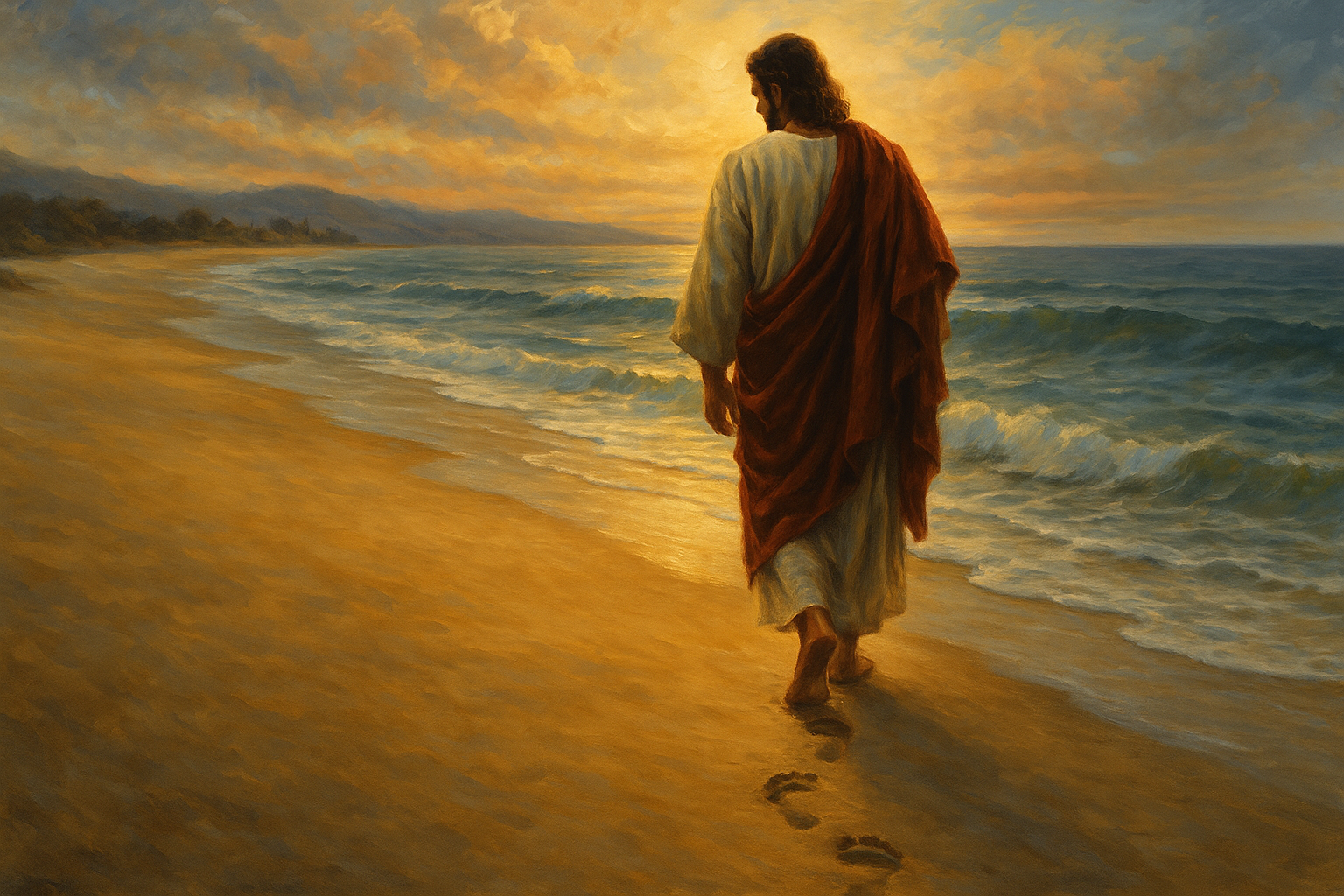
When we talk about “footprints in the sand,” we often think about that famous poem where a man looks back on his life and sees only one set of footprints during his hardest times. He asks God why He left him when he needed Him most. God answers,
“My child, when you saw only one set of footprints, it was then that I carried you.”
Before Jesus ever walked on Earth, His footprints were already marked in history. Long before His birth, God gave promises through prophets that a Savior - the Messiah - would come. He would walk among us, teach us, love us, and save us.
The First Footprint: Genesis 3:15
“I will put enmity between you and the woman, and between your seed and her seed; He shall bruise your head, and you shall bruise His heel.” (Genesis 3:15)
This verse is called the Protoevangelium, which means “the first gospel.” It’s the very first time in the Bible that God promises hope. Even though Adam and Eve had sinned, God said that one day, a child born from a woman would crush the serpent - Satan - and defeat sin and death.
When God said, “He shall bruise your head,” it meant that Jesus would one day destroy Satan’s power. And when it said, “you shall bruise His heel,” it meant that Jesus would be hurt - pointing to His suffering on the cross. From the very start, God’s plan for salvation was already set. Jesus’ journey - His footprints - were always meant to lead to victory over evil.
Isaiah’s Prophecies: Light in Darkness
“Behold, the virgin shall conceive and bear a Son, and shall call His name Immanuel.” (Isaiah 7:14) “For unto us a Child is born, unto us a Son is given… and His name will be called Wonderful, Counselor, Mighty God, Everlasting Father, Prince of Peace.” (Isaiah 9:6)
Isaiah lived hundreds of years before Jesus, but God showed him what was coming. He said a virgin would give birth to a child - something no one had ever seen before - and that this child would be called Immanuel, which means “God with us.”
Isaiah also described what Jesus would be like: Wonderful, Counselor, Mighty God, Everlasting Father, Prince of Peace. Each of these names shows who Jesus really is.
** - Wonderful Counselor** - because His wisdom brings comfort and guidance. - Mighty God - because He carries all power and authority. - Everlasting Father - because His love never ends. - Prince of Peace - because He brings peace into our hearts and our world.
Isaiah’s words tell us that Jesus’ life would bring light where there was darkness, hope where there was despair, and order where there was chaos.
Micah’s Prophecy: A Humble Beginning
“But you, Bethlehem Ephrathah, though you are little among the thousands of Judah, yet out of you shall come forth to Me the One to be Ruler in Israel, whose goings forth are from of old, from everlasting.” (Micah 5:2)
Micah was another prophet who spoke of the Messiah’s coming. He said that the Savior would be born in Bethlehem - a small, quiet town. This showed that Jesus would come in humility, not as a rich or powerful ruler, but as one close to the people.
Even though Bethlehem was small, it was chosen for something big. From that humble place, God would bring forth the King of kings. Jesus’ first footprints were never meant to be on palace floors - they were meant to be in the dust, among the poor and the ordinary.
The Expectation of a Messiah
By the time Jesus was born, Israel was living under Roman rule. The people were tired, oppressed, and waiting for deliverance. For generations they had held on to the promise that God would send a Messiah.
In every synagogue reading, in every festival, and in every prayer, they whispered the same hope: “Messiah, come.”
The people imagined a powerful warrior or a great political leader who would overthrow the Romans, just like King David once defeated Israel’s enemies. But God’s plan was different.
The Messiah would not come to destroy empires - He would come to destroy sin. He would not come to fight against men, but to fight for their hearts. His battle was not against soldiers, but against death itself.
Jesus came not just to save Israel, but to save the whole world. His footprints would walk the path that no one else could - the path that led from heaven to the cross, and from death to life.
The Lineage of Jesus - Footprints Through Generations
When the Gospels of Matthew and Luke begin, they both start with something we might normally skip - a long list of names. But these genealogies were not just random history. They were proof that God keeps His promises.
In Jewish culture, family lineage meant everything. It showed your inheritance, your tribe, your family’s story, and your connection to God’s covenant.
For Jesus, His lineage was more than a record of names - it was a trail of prophecy fulfilled. Every person listed is like a footprint leading up to His birth.
The Covenant With Abraham
“In your seed all the nations of the earth shall be blessed.” (Genesis 22:18)
When God spoke to Abraham, He gave him a promise that went beyond land or children. He promised that through Abraham’s descendants, the whole world would be blessed.
This was the beginning of God’s rescue plan. Every generation after Abraham was another step toward Jesus. Matthew 1:1 opens by saying:
“Jesus Christ, the son of David, the son of Abraham.”
This one verse connects Jesus to two great promises:
- God’s promise to Abraham that his seed would bless the nations.
- God’s promise to David that his throne would last forever.
By coming from Abraham’s family, Jesus was the fulfillment of the blessing. His footprints would not stay in one nation - they would reach across the whole world, touching every people and every culture.
The Royal Line of David
“I will raise up your offspring after you, who shall come from your body, and I will establish his kingdom… and I will establish the throne of his kingdom forever.” (2 Samuel 7:12–13)
“The Lord God will give Him the throne of His father David, and He will reign over Jacob’s descendants forever; His kingdom will never end.” (Luke 1:32–33)
King David was one of Israel’s greatest leaders. God promised him that one of his descendants would rule forever - not just over Israel, but over all creation.
When the angel Gabriel visited Mary, he told her that her child would be this promised King. Jesus’ throne would never end, because His kingdom was not earthly - it was eternal.
The Jewish people knew that the Messiah had to come from David’s family. That’s why the genealogies mattered so much. They confirmed that Jesus was not just spiritually chosen - He was legally and prophetically the rightful King.
Joseph’s Legal Lineage
In Matthew 1, the family line runs from Abraham → David → Solomon → Joseph, who was the husband of Mary.
This shows that through Joseph, Jesus had the legal right to David’s throne according to Jewish law. Even though Joseph was not His biological father, Jesus was adopted into his royal line, which gave Him full authority under Jewish inheritance law.
Mary’s Blood Lineage
Luke 3 records another genealogy, tracing Jesus’ family through David’s son Nathan instead of Solomon. Many believe this is Mary’s family line. It proves that Jesus was not only legally from David’s royal house through Joseph but also biologically from David’s bloodline through Mary.
This dual connection is important because it shows that:
- Through Joseph, Jesus had the legal right to the throne.
- Through Mary, Jesus had the human bloodline of David and was fully man.
He was both the Son of God and the Son of Man - divine and human at the same time.
Footprints of Imperfect People
One of the most beautiful parts of Jesus’ family tree is that it’s full of imperfect people. It doesn’t hide their mistakes. It tells the truth about brokenness, grace, and redemption.
- Rahab was a Canaanite woman who had been a prostitute, but she believed in God and helped His people. - Ruth was a Moabite widow, not even from Israel, but she was faithful and became part of Jesus’ story. - Bathsheba was connected to King David’s sin, but from her line came Solomon and eventually the Messiah. ** - Tamar** went through a painful and scandalous story, but God still used her life to move His plan forward.
These names remind us that God works through imperfect people. He doesn’t only use the powerful or the perfect. He works through the broken, the rejected, and the outsiders to bring His promises to life.
Jesus’ family story shows that His mission was for everyone - especially for those who feel unworthy or forgotten. His footprints are for the sinner, the outcast, and the hurting heart.
From Adam to Christ
Luke’s genealogy ends not with Abraham, but with Adam, the first man, who is called “the son of God.”
This reminds us that Jesus came not only to save Israel, but to save all humanity. He came for every person on Earth. His footprints go all the way back to the beginning of creation, showing that God’s plan to redeem mankind was written from the start.
From Adam to Abraham, from David to Mary - every step, every story, and every generation led to Jesus. The footprints in history all pointed to the One who would save us.
The Birth of Jesus - Footprints in Bethlehem
The arrival of Jesus Christ is the center of history. All the prophecies, the family line, and the waiting pointed to this moment when God stepped into our world. His first earthly footprints were in Bethlehem, not in palaces or big cities, but in a humble manger. God chose a simple beginning to show He is close to ordinary people.
The Announcement to Mary
Luke tells us the angel Gabriel visited a young woman in Nazareth named Mary. He greeted her:
“Rejoice, highly favored one, the Lord is with you; blessed are you among women!” (Luke 1:28)
Mary felt afraid and confused, but the angel explained she would have a Son by the power of the Holy Spirit. He would be Jesus, the Son of the Most High, and His throne would never end.
Mary believed God and answered in faith:
“Behold the maidservant of the Lord! Let it be to me according to your word.” (Luke 1:38)
What this means for us: Mary trusted God even when she did not understand everything. Faith is saying yes to God’s plan, even when it feels big or scary.
Joseph’s Dream
Joseph, an honorable man, found out Mary was pregnant. He planned to end the engagement quietly. Then God sent an angel to him in a dream:
“Do not be afraid to take Mary your wife, for that which is conceived in her is of the Holy Spirit. And she will bring forth a Son, and you shall call His name JESUS, for He will save His people from their sins.” (Matthew 1:20–21)
Joseph obeyed. He chose obedience over pride and faith over fear.
What this means for us: Obedience to God sometimes costs us, but it always leads to His purpose.
Bethlehem and the Manger
Because Caesar ordered a census, Joseph and Mary traveled to Bethlehem - this fulfilled Micah’s prophecy about the Messiah’s birthplace. When they arrived, there was no room in the inn. Mary gave birth to her firstborn Son in a stable and laid Him in a manger.
Why this matters: The Creator of the universe entered the world in poverty, not wealth. His first footprints were in straw, not gold. God wanted us to know that Jesus came close to the poor, the overlooked, and the humble.
The Shepherds’ Witness
Out in the fields, shepherds were watching their sheep. Suddenly an angel announced:
“Do not be afraid, for behold, I bring you good tidings of great joy… For there is born to you this day in the city of David a Savior, who is Christ the Lord.” (Luke 2:10–11)
Then many angels appeared, praising God: “Glory to God in the highest, and on earth peace, goodwill toward men!” The shepherds hurried to Bethlehem and found the baby. They became the first people to share the good news.
What this means for us: God chose shepherds, ordinary workers, to hear the news first. The gospel starts at the edges, not at the top. No one is too small or too far for God.
The Visit of the Wise Men
Some time later, wise men from the East came, following a star that guided them to Jesus. They brought gifts: - Gold - pointing to His kingship ** - Frankincense** - pointing to His divinity and worship ** - Myrrh** - pointing to His suffering and death
Why this matters: Even at His birth, Jesus’ identity and mission were clear. He is King, He is God with us, and He came to give His life.
Herod’s Rage and the Escape to Egypt
When King Herod heard a new “King of the Jews” was born, he felt threatened. He ordered the killing of baby boys in Bethlehem. But God warned Joseph in a dream, and the family escaped to Egypt until Herod died. This fulfilled the prophecy:
“Out of Egypt I called My Son.” (Hosea 11:1)
What this means for us: From the start, Jesus faced danger and opposition. But God protected Him. God’s plan cannot be stopped by human evil. His footprints are guarded by God’s hand.
The Early Life of Jesus - Footprints in Nazareth
After His birth, Jesus’ early years were simple and quiet. There were miracles around His arrival, but His childhood looked ordinary. God was preparing Him in hidden ways - shaping His character, His wisdom, and His obedience.
Flight Into Egypt
After the wise men left, an angel told Joseph in a dream:
“Arise, take the young Child and His mother, flee to Egypt, and stay there until I bring you word; for Herod will seek the young Child to destroy Him.”
(Matthew 2:13)
Joseph obeyed that same night. This fulfilled the prophecy:
“When Israel was a child, I loved him, and out of Egypt I called My son.” (Hosea 11:1)
Herod’s massacre in Bethlehem (Matthew 2:16–18) showed the darkness fighting against the Light from the very beginning. Yet God protected His Son until the right time.
What this means for us: God can direct and protect our steps. Obedience opens the way for His protection and guidance.
Return to Nazareth
After Herod died, an angel said:
“Arise, take the young Child and His mother, and go to the land of Israel, for those who sought the young Child’s life are dead.” (Matthew 2:20)
Joseph heard that Archelaus ruled Judea, so after another warning in a dream, he settled in Galilee, in a small town called Nazareth. This fulfilled what the prophets said:
“He shall be called a Nazarene.” (Matthew 2:23)
Nazareth was an ordinary, even looked-down-on place. Nathanael later asked, “Can anything good come out of Nazareth?” (John 1:46). But this is where Jesus grew up - learning obedience, humility, and hard work.
What this means for us: God can raise greatness from places people ignore. Your town, your school, your family - none of these can limit God’s plan for you.
The Boy in the Temple
The only story from Jesus’ childhood is when He was twelve. His family traveled to Jerusalem for Passover. When they left, Jesus stayed behind in the temple. After three days of searching, His parents found Him sitting with the teachers, listening and asking questions:
“And all who heard Him were astonished at His understanding and answers.” (Luke 2:47)
When His parents asked why He had stayed, He said:
“Why did you seek Me? Did you not know that I must be about My Father’s business?” (Luke 2:49)
Even as a boy, Jesus knew His purpose. His true Father is God. His footprints were already moving toward His mission.
What this means for us: Being young does not mean you cannot know God’s purpose. Start now. Ask questions. Learn the Word. Be about the Father’s business.
Growing in Wisdom and Stature
Luke gives a beautiful summary of Jesus’ youth:
“And Jesus increased in wisdom and stature, and in favor with God and men.” (Luke 2:52)
This shows balanced growth in four ways: - Wisdom - learning truth and making good choices - Stature - growing strong and healthy - Favor with God - a close, real relationship with the Father - Favor with men - respect and good character in community
Jesus lived like any other boy or teenager in a working-class family. He likely learned Joseph’s trade as a carpenter (Mark 6:3) and took part in synagogue life with His community. His life in Nazareth was ordinary, but God used it to prepare Him to understand ordinary people.
What this means for us: God forms us in the everyday - in school, at home, at church, on the sports field, at work. Quiet seasons are not wasted seasons.
Silent Years, Hidden Footprints
From age twelve until about thirty, the Gospels are silent. That silence is not empty. It shows that God’s preparation often happens in secret. Jesus’ hidden years tell us that every step - even the ones nobody sees - is part of God’s plan.
What this means for us: Do not rush the process. Be faithful where you are. God is writing your story in the quiet as well as in the spotlight.
The Ministry and Teachings of Jesus - Footprints of the Kingdom
After years of quiet preparation in Nazareth, Jesus finally began His public ministry. It lasted only about three years, but those years changed the world forever. His life showed us what the Kingdom of God looks like - love, truth, humility, and power walking together.
The Baptism of Jesus - A New Beginning
Before Jesus began teaching, He went to John the Baptist, who was preaching repentance and baptizing people in the Jordan River. John pointed to Him and said:
“Behold! The Lamb of God who takes away the sin of the world!” (John 1:29)
Although Jesus had no sin, He chose to be baptized to set an example for us. When He came up out of the water:
“The heavens were opened, and He saw the Spirit of God descending like a dove and lighting upon Him. And suddenly a voice came from heaven, saying, ‘This is My beloved Son, in whom I am well pleased.’” (Matthew 3:16–17)
This moment was like heaven opening to say, The King has arrived. It was the start of His mission - His public declaration that He came to save the world.
What this means for us: Baptism is not just a ritual. It is an outward sign of an inward change - choosing to walk with God and live by His will.
The Temptation in the Wilderness - Footprints of Victory
Right after His baptism, Jesus was led by the Spirit into the wilderness. There, for 40 days, He fasted and faced temptation from the devil.
Satan tried to test Him three times: 1. Turn stones into bread to satisfy hunger.
“Man shall not live by bread alone, but by every word that proceeds from the mouth of God.” (Matthew 4:4) Jesus showed that our real strength comes from God’s Word, not food or comfort. 2. Jump from the temple to prove who He was.
“You shall not tempt the Lord your God.” (Matthew 4:7) Jesus taught us not to test God but to trust Him. 3. Bow down for power and kingdoms.
“You shall worship the Lord your God, and Him only you shall serve.” (Matthew 4:10) Jesus refused the easy road to glory. He chose obedience instead of compromise.
Jesus won every battle with the truth of Scripture. His victory showed us how to stand strong against temptation - by knowing God’s Word and holding firm in faith.
The Call of the Disciples - Footprints to Follow
After His temptation, Jesus began preaching in Galilee, saying:
“The time is fulfilled, and the kingdom of God is at hand. Repent, and believe in the gospel.” (Mark 1:15)
While walking by the Sea of Galilee, He called two fishermen, Simon (Peter) and Andrew:
“Follow Me, and I will make you fishers of men.” (Matthew 4:19) They immediately left their nets and followed Him.
He also called James and John, then later Matthew, a tax collector. Jesus did not pick rich, famous, or powerful people. He chose ordinary men - fishermen, workers, and even outcasts - and turned them into world changers.
What this means for us: God doesn’t look for the most talented. He looks for the willing. If we follow Him, He can use our lives to reach others.
The Sermon on the Mount - The Constitution of the Kingdom
Jesus’ most famous message was preached on a mountain. It’s found in Matthew chapters 5 to 7 and shows what life in God’s Kingdom looks like.
He began with The Beatitudes:
“Blessed are the poor in spirit, for theirs is the kingdom of heaven.” “Blessed are the meek, for they shall inherit the earth.” “Blessed are the peacemakers, for they shall be called sons of God.” (Matthew 5:3–9)
He also said:
“You are the salt of the earth… You are the light of the world.” (Matthew 5:13–14) Our lives should make the world better and brighter.
He taught about forgiveness, love, prayer, and faith:
“Love your enemies, bless those who curse you, do good to those who hate you.” (Matthew 5:44) “Seek first the kingdom of God and His righteousness, and all these things shall be added to you.” (Matthew 6:33)
He ended with this powerful truth:
“Whoever hears these sayings of Mine, and does them, I will liken him to a wise man who built his house on the rock.” (Matthew 7:24)
What this means for us: Following Jesus means living differently - choosing humility, peace, and love when the world expects pride, revenge, and hate.
The Parables - Stories With Eternal Footprints
Jesus often taught through parables - short stories with deep meaning. They helped people understand the Kingdom of God in simple, real-life ways.
Some examples: - The Sower (Matthew 13:3–9) - God’s Word is like a seed. If your heart is good soil, it grows and changes your life. - The Good Samaritan (Luke 10:25–37) - Love has no limits. Show kindness even to strangers and enemies. - The Prodigal Son (Luke 15:11–32) - God’s love never runs out. Even when we walk away, He runs to welcome us back. - The Mustard Seed (Matthew 13:31–32) - Faith may start small but grows into something strong and life-changing. - The Ten Virgins (Matthew 25:1–13) - Be ready for Jesus’ return. Don’t live carelessly.
What this means for us: Every story is an invitation. Jesus doesn’t just want us to listen - He wants us to live what He teaches.
The Miracles - Signs of the Kingdom
Jesus did many miracles that proved His power and compassion: 1. He calmed storms (Mark 4:39) - showing control over nature. 2. He healed the sick and blind (Matthew 9:6, John 9:7). 3. He raised the dead (John 11:43–44). 4. He fed thousands with just a few loaves and fish (Matthew 14:19–20). 5. He cast out demons (Mark 1:25–26).
“And truly Jesus did many other signs in the presence of His disciples… but these are written that you may believe that Jesus is the Christ, the Son of God.” (John 20:30–31)
Each miracle was like a footprint of heaven touching earth - showing that God’s power is real and His heart is full of love.
Servant Leadership - Footprints of Humility
On the night before He died, Jesus did something no one expected. He took a towel, knelt down, and washed His disciples’ feet.
“If I then, your Lord and Teacher, have washed your feet, you also ought to wash one another’s feet.” (John 13:14–15)
He showed that true leadership means serving others.
“For even the Son of Man did not come to be served, but to serve, and to give His life a ransom for many.” (Mark 10:45)
What this means for us: In God’s Kingdom, greatness is not about being served - it’s about serving others with love.
The Path to the Cross - Footprints of Sacrifice
Jesus’ ministry brought hope to many but also angered religious leaders. They expected a Messiah who would fight Rome, not forgive enemies. But Jesus came to save, not to conquer. Every step He took led closer to the cross - the ultimate act of love.
Growing Opposition
Jesus healed people, forgave sins, and challenged religious pride. Some leaders called Him a threat.
“From that day on they plotted to put Him to death.” (John 11:53)
Even though His footprints brought healing, their hearts hardened. Yet Jesus continued with compassion.
The Triumphal Entry
As Passover came, Jesus entered Jerusalem riding a donkey, fulfilling prophecy:
“Behold, your King is coming to you; lowly and sitting on a donkey.” (Zechariah 9:9) “Hosanna to the Son of David! Blessed is He who comes in the name of the Lord!” (Matthew 21:9)
The people shouted with joy, waving palm branches. But just days later, those same voices would call, “Crucify Him.”
What this means for us: People can change their tune quickly. Follow Jesus for who He is, not just for what He can give you.
The Cleansing of the Temple
When Jesus saw merchants using the temple to make money, He was filled with holy anger.
“It is written, ‘My house shall be called a house of prayer,’ but you have made it a ‘den of thieves.’” (Matthew 21:13)
He turned over tables and cleared the courts. His passion was not for power, but for holiness.
The Last Supper
The night before His death, Jesus shared a Passover meal with His disciples. He broke bread and poured wine, giving them a new meaning:
“Take, eat; this is My body.” (Matthew 26:26) “Drink from it, all of you. For this is My blood of the new covenant, which is shed for many for the remission of sins.” (Matthew 26:27–28)
This meal was more than tradition - it was a picture of what He would do on the cross.
Betrayal in Gethsemane
After supper, they went to the Garden of Gethsemane. Jesus prayed in deep sorrow:
“Father, if it is Your will, take this cup away from Me; nevertheless not My will, but Yours, be done.” (Luke 22:42)
He knew the suffering that was coming but chose obedience. His sweat fell like drops of blood (Luke 22:44). Then Judas arrived with soldiers, betraying Him with a kiss for thirty pieces of silver - just as prophecy said (Zechariah 11:12–13).
What this means for us: Even Jesus faced pressure, pain, and loneliness, but He still said yes to God’s will. Real strength is doing what’s right even when it costs you.
The Trials
Jesus was taken to the high priest, to Pilate, and to Herod. False witnesses lied about Him, but He stayed silent:
“He was oppressed and He was afflicted, yet He opened not His mouth; He was led as a lamb to the slaughter.” (Isaiah 53:7)
Pilate found no fault in Him, but the crowd shouted:
“Crucify Him!” (Luke 23:21)
The same people who cheered Him now turned against Him. Still, Jesus did not hate them. He loved them.
The Crucifixion
They beat Him, mocked Him, and crowned Him with thorns. They forced Him to carry His cross to Golgotha.
“They pierced My hands and My feet.” (Psalm 22:16)
As He hung there, He said:
“Father, forgive them, for they do not know what they do.” (Luke 23:34)
Darkness covered the land for three hours. Then Jesus cried out:
“It is finished!” (John 19:30) “Father, into Your hands I commit My spirit.” (Luke 23:46)
At that moment, the temple curtain tore in two, showing that the barrier between God and man was gone. The sacrifice was complete. Jesus had paid for our sins.
The Burial
A man named Joseph of Arimathea, a quiet believer, asked Pilate for Jesus’ body. He placed it in his own new tomb (Matthew 27:59–60). A large stone sealed the entrance, and guards were stationed outside.
It looked like the end. Hope seemed buried. But what no one realized was that Heaven was still moving. The stone wasn’t the end of the story - it was the beginning of resurrection.
What this means for us: Sometimes God is working in the silence. When it feels like the end, He’s preparing a greater beginning. Sunday was coming.
The Resurrection and Legacy - Footprints of Eternal Life
The cross was not the end. Though His followers wept, and the world thought it had silenced Him, Jesus rose again, leaving footprints not only in the sand of Judea but in the hearts of all who believe. The resurrection is the foundation of our faith and the ultimate proof that Jesus is the Son of God.
The Empty Tomb
Early on the first day of the week, Mary Magdalene and the other women came to the tomb with spices. But the stone was rolled away, and His body was gone.
An angel declared:
“He is not here; for He is risen, as He said. Come, see the place where the Lord lay.” (Matthew 28:6)
The resurrection was not just a miracle; it was the fulfillment of His own words:
“Destroy this temple, and in three days I will raise it up.” (John 2:19)
Simple meaning for us: Jesus said He would rise, and He did. Death could not hold Him. Sin could not bind Him. His footprints continued beyond the grave so that our lives could continue beyond fear and guilt.
Appearances to His Followers
Jesus appeared to His disciples over forty days (Acts 1:3), proving He was alive.
- Mary Magdalene (John 20:14–16) - He called her by name, and she recognized Him.
- The disciples on the road to Emmaus (Luke 24:13–32) - He explained the Scriptures, and their hearts burned within them.
- The eleven disciples (John 20:19–29) - He showed His wounds; Thomas declared, “My Lord and my God!”
- By the Sea of Galilee (John 21:6–12) - He cooked breakfast and restored Peter: “Feed My sheep.”
- Over five hundred brethren at once (1 Corinthians 15:6).
Why these moments matter: These were real meetings with the risen Jesus, not dreams or stories. He spoke, ate, showed scars, and brought peace. He changed their fear into bold faith.
The Great Commission
Before ascending, Jesus gave His disciples their mission:
“Go therefore and make disciples of all the nations, baptizing them in the name of the Father and of the Son and of the Holy Spirit, teaching them to observe all things that I have commanded you; and lo, I am with you always, even to the end of the age.” (Matthew 28:19–20)
For us today: Following Jesus means sharing Jesus. Wherever we live - school, home, online, community - we carry His message and His presence.
The Ascension
Forty days after His resurrection, Jesus led His disciples to the Mount of Olives. As He blessed them, He was taken up into heaven, and a cloud received Him out of their sight (Acts 1:9). Two angels said:
“This same Jesus, who was taken up from you into heaven, will so come in like manner as you saw Him go into heaven.” (Acts 1:11)
What it shows: Jesus is alive, reigning, and returning. The ascension was not an ending but a transition - His earthly footprints shifted into the Spirit’s presence and power among His people.
The Coming of the Spirit
Ten days later, on the day of Pentecost, the Holy Spirit was poured out (Acts 2:1–4). The disciples, once fearful, became bold witnesses. Peter preached, and three thousand were saved in one day (Acts 2:41). The same Spirit that raised Jesus from the dead now empowered His followers to continue His mission (Romans 8:11).
What this means for us: You are not expected to live for Jesus in your own strength. God gives you the Holy Spirit to help you speak, love, forgive, and stand strong.
The Legacy of His Footprints
Jesus left no monuments, no palaces, no earthly empire. His legacy was greater:
- The forgiveness of sins (Ephesians 1:7).
- Eternal life (John 11:25–26).
- The birth of the Church (Acts 2:42–47).
- The promise of His return (John 14:3).
His footprints are seen in every believer who walks in His way. As Paul declared:
“Imitate me, just as I also imitate Christ.” (1 Corinthians 11:1)
Bottom line: The footprints of Jesus continue - from Galilee to Jerusalem, from the tomb to the throne, and from the first disciples to us today. Our lives become the next set of footprints that point people to Him.
Footprints in the Sand for Us Today - Conclusion & Call
His Footprints in Prophecy
Every promise fulfilled reminds us that God’s Word never fails (Numbers 23:19). His footprints in prophecy give us confidence that His promises for us will also come to pass.
For youth: When God makes a promise, He keeps it. If He kept the biggest promise - sending Jesus - He will keep His promises to guide, forgive, and be with you.
His Footprints in Humility
Though He is King of kings, He chose a manger for His birthplace (Luke 2:7). Though He is Lord of glory, He worked as a carpenter’s son (Mark 6:3). Though He is eternal, He humbled Himself to serve and to wash feet (John 13:14–15).
“But He made Himself of no reputation, taking the form of a bondservant… He humbled Himself and became obedient to the point of death, even the death of the cross.” (Philippians 2:7–8)
For youth: Real greatness is not showing off - it is serving others. Choose humility in your home, your school, your team, and your friendships.
His Footprints in Teaching
He gave us a way of life that turned the world upside down:
- “Love your enemies.” (Matthew 5:44)
- “Forgive seventy times seven.” (Matthew 18:22)
- “Seek first the kingdom of God.” (Matthew 6:33)
- “Do to others as you would have them do to you.” (Luke 6:31)
These words are not suggestions but commands. They are the footprints of the Kingdom. To walk in them is to live as His disciple.
For youth: These teachings work in real life - in group chats, on the field, at home, and online. Love when it is hard. Forgive when you are angry. Put God first in choices and time. Treat people the way you want to be treated.
His Footprints in Suffering
“But He was wounded for our transgressions, He was bruised for our iniquities; the chastisement for our peace was upon Him, and by His stripes we are healed.” (Isaiah 53:5)
Every nail, every lash, every drop of blood was a footprint of grace in the sand of humanity.
For youth: Jesus understands pain - betrayal, lies, loneliness, and injustice. He carried it so you wouldn’t carry it alone. Bring your hurt to Him.
His Footprints in Victory
“I am the resurrection and the life. He who believes in Me, though he may die, he shall live.” (John 11:25)
Because He lives, we too shall live. His footprints in resurrection are the assurance of eternal life.
For youth: Your future is bigger than your past. With Jesus, failure is not final, and death is not the end.
His Footprints With Us
The poem “Footprints in the Sand” reminds us that in our hardest trials, when we see only one set of footprints, it was then He carried us. Jesus Himself promised:
“And lo, I am with you always, even to the end of the age.” (Matthew 28:20)
When we stumble, His footprints do not leave us. When we suffer, His steps walk beside us. When we cannot go on, He carries us.
For youth: You are never alone - not in exams, not in anxiety, not in family stress, not in secret struggles. He is with you always.
Walking in His Footprints - Our Response
“Christ also suffered for us, leaving us an example, that you should follow His steps.” (1 Peter 2:21)
To walk in His footprints means:
- To love as He loved.
- To serve as He served.
- To forgive as He forgave.
- To endure as He endured.
- To hope as He promised.
For youth: Start small and start now - one act of love, one choice to serve, one moment to forgive, one prayer to endure, one decision to hope.
Final Reflection
Jesus age, when He fulfilled His mission. At 33, He had spread the gospel, raised disciples, and changed eternity. He left us an unshakable legacy. His footprints in the sand are not faint marks washed away by time; they are eternal paths written into Scripture, sealed by His Spirit, and carved into the hearts of all who follow Him.
The question for us today is: Will we walk in His footprints?