
ONE GOD AFRICA · KINGDOM WISDOM
A Message from the Vine
One Vine. Many Branches. Many Tribes. One Body in Christ.
"I am the true vine, and my Father is the husbandman."
JOHN 15:1 — KJV
My beloved children,
Listen closely to the message of the True Vine.
Imagine a message from our Heavenly Father, calling His children to understand the purpose of their differences and the unity they are called to share through Jesus Christ.
We enter this world through different families.
Different communities.
Different cultures.
Different nations.
And different circumstances.
Yet we share something important.
We were not created to live without relationships, responsibilities, or community.
Just as the human body contains many parts, the body of Christ contains many members.
And although those members have different gifts and responsibilities, they are called to serve one another.
Now consider this question.
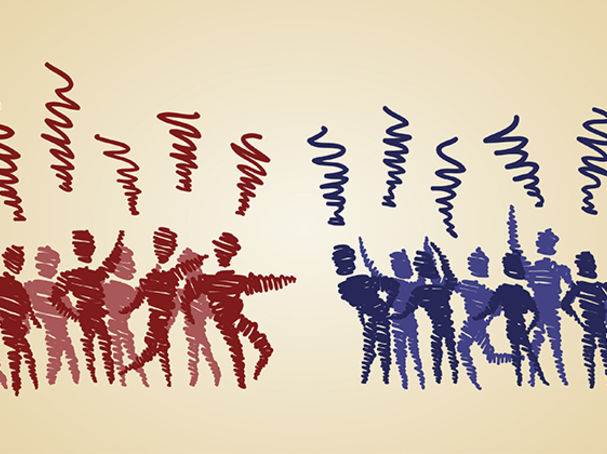
Why do people form tribes?
Why do we identify with particular groups?
And how can the very things that bring us together sometimes become the things that divide us?
Let us examine tribalism, the gifts God has given us, and the message of Jesus Christ: one vine, many branches.
This opening is a devotional reflection inspired by Scripture, not a quotation of additional words spoken by God.
1. My Beloved Children
Brothers and sisters, consider how differently we enter this world.
Some are born into large families.
Others into small families.
Some grow up surrounded by relatives.
Others grow up without knowing one or both parents.
Some are raised in cities.
Others in villages, farming communities, or coastal towns.
Some speak one language at home.
Others grow up speaking several.
These experiences shape how we understand the world.
They influence our traditions.
Our relationships.
Our sense of belonging.
And sometimes our understanding of who we are.
But here is the question.
Are our differences meant to prevent us from recognising what we share?
Consider a family.
Children from the same household can have very different personalities.
One may be outspoken.
Another may be quiet.
One may enjoy solving problems.
Another may enjoy caring for people.
Yet they remain members of the same family.
Their differences do not automatically make one more valuable than another.
And this is an important principle when considering the Kingdom of God.
Unity does not require everyone to become identical.
It requires us to recognise our shared responsibilities and learn to work together.
We may enter life through different families, cultures, and nations. But our differences should not prevent us from recognising the dignity and value of others.
2. What Is Tribalism?
What is tribalism?
Tribalism describes a strong sense of identity, loyalty, or attachment to a particular group.
That group may be connected through ancestry.
Culture.
Language.
Religion.
Community.
Or shared interests.
People naturally seek belonging.
We want to be recognised.
We want to feel connected.
We want to know that we are part of something.
And belonging can provide meaningful support.
But what happens when loyalty to one group causes us to mistreat another?
What happens when pride becomes more important than truth?
What happens when we begin believing that our group is inherently more valuable than everyone else?
That is where belonging can become division.
Let us examine four traits often associated with tribalism.
People identify with shared customs, traditions, values, and experiences. These connections can preserve culture and strengthen community.
Loyalty can encourage responsibility and mutual support. But loyalty should never require us to abandon truth or excuse wrongdoing.
When we begin treating outsiders as enemies simply because they belong to another group, our loyalty has become destructive.
Belonging can create powerful emotional bonds. Those emotions should be guided by wisdom rather than allowed to control our conduct.
Now ask yourself.
Do you belong to a group that encourages you to become a better person?
Or does that group encourage you to look down on people who are different?
There is a difference.
Belonging becomes dangerous when loyalty to your own group matters more than truth, compassion, and the dignity of others.
3. One Body, Many Parts
Let us turn to the Apostle Paul's teaching about the body of Christ.
"For as the body is one, and hath many members, and all the members of that one body, being many, are one body: so also is Christ."
1 CORINTHIANS 12:12 — KJV
Consider your own body.
You have eyes.
Hands.
Feet.
Ears.
And many other parts.
Each performs a different function.
But they work together.
Now imagine your hand saying to your foot:
"I don't need you."
Or your eyes saying to your ears:
"You have no purpose."
Would that make sense?
No.
Paul uses this analogy to explain the importance of every member within the body of Christ.
"And the eye cannot say unto the hand, I have no need of thee: nor again the head to the feet, I have no need of you."
1 CORINTHIANS 12:21 — KJV
Notice the message.
Different responsibilities do not mean different levels of human worth.
One person may lead.
Another may teach.
Another may encourage.
Another may serve quietly without receiving recognition.
Yet each can contribute something meaningful.
"Now ye are the body of Christ, and members in particular."
1 CORINTHIANS 12:27 — KJV
Paul also explains that the members of the body should care for one another.
"That there should be no schism in the body; but that the members should have the same care one for another."
1 CORINTHIANS 12:25 — KJV
So ask yourself:
Are you using your gifts to strengthen the people around you?
Or are you using your position to convince others that they are less important?
A body becomes stronger when its members work together. The same principle applies to a community built on shared responsibility and care.
4. Tribalism: Unity or Division?
Think about your school days.
Perhaps your school had different houses.
Each house had its own colour.
Its own name.
Its own identity.
And its own sense of pride.
During sporting events, those houses would compete.
One group would support its team.
Another would support theirs.
There would be cheering.
Competition.
Celebration.
And disappointment.
But what made the competition possible?
Shared rules.
Everyone participated within the same event.
Everyone understood the purpose of the competition.
And despite representing different houses, they remained part of the same school.
Now consider what would happen if one house decided that the others did not deserve to participate.
Or if its members began attacking people simply because they wore different colours.
The purpose of the competition would be lost.
What began as healthy belonging would become hostility.
We see similar patterns in communities.
Different neighbourhoods.
Different sports teams.
Different organisations.
Different cultural groups.
There is nothing inherently wrong with having an identity.
But identity should not become an excuse for hatred.
Jesus challenges us to love beyond the boundaries of our own group.
"But I say unto you, Love your enemies, bless them that curse you, do good to them that hate you."
MATTHEW 5:44 — KJV
That is a difficult teaching.
It requires us to examine how we treat people who do not share our identity, opinions, or loyalties.
Support your community. Honour your culture. Celebrate your identity. But never allow belonging to become a reason to hate someone outside your group.
5. The Houses of Hogwarts — A Parable in Fiction
Let us consider something familiar from fiction.
In the world of Harry Potter, students at Hogwarts are divided into different houses.
Each house is associated with particular characteristics.
Different strengths.
Different personalities.
And different values.
Although this is a fictional story, we can use the houses as an illustration of the different qualities people bring into a community.
The Four Houses
The brave and bold. People willing to stand up for others and defend what they believe is right.
The determined and resourceful. People who think strategically and pursue difficult goals. Ambition can build meaningful things when guided by integrity.
The thoughtful and inquisitive. People who seek understanding, ask questions, and value knowledge.
The steadfast and hardworking. People who value fairness, patience, and supporting others.
Now consider these qualities.
Courage.
Ambition.
Wisdom.
Loyalty.
Can a healthy community benefit from all four?
Of course.
But each quality also requires guidance.
Courage without wisdom can become recklessness.
Ambition without integrity can become exploitation.
Knowledge without humility can become arrogance.
And loyalty without discernment can become blind allegiance.
That is why our strengths should never become idols.
They should be developed and directed towards what is good.
The Hogwarts houses are fictional illustrations of human traits, not spiritual categories established by Scripture.
Your strengths are valuable. But the value of a gift is also revealed in how responsibly you use it.
6. The Factions of Divergent — A Mirror of Human Strengths
Now consider another fictional example.
In Divergent, society is organised into factions associated with different virtues.
Each faction places particular emphasis on a quality it considers important.
Let us examine those qualities.
Putting the needs of others before selfish desires. A reminder of the importance of service and humility.
Valuing harmony, cooperation, and peaceful relationships. A reminder that communities need people who build bridges.
Speaking truthfully and valuing openness. A reminder that trust depends upon honesty.
Facing danger and standing against fear. A reminder that protecting others sometimes requires bravery.
Seeking learning and understanding. A reminder that knowledge can help communities solve problems and make wise decisions.
Now imagine a community with knowledge but no compassion.
What would happen?
Imagine courage without honesty.
Or peace without a willingness to confront injustice.
Or loyalty without wisdom.
Each quality becomes stronger when balanced by others.
And this is where the illustration becomes meaningful.
People do not need to possess identical strengths to work towards a shared purpose.
We can contribute in different ways.
We can learn from one another.
And we can recognise that the abilities we lack may be present in the people around us.
But there is also a warning.
When people reduce one another to a single label, they can overlook the complexity of human character.
We are more than one quality.
More than one title.
And more than one group identity.
The factions of Divergent are used here as a literary analogy, not as evidence of a divine system of human classification.
Different strengths can serve a common purpose. But no single strength should convince us that we no longer need the gifts of others.
7. One Vine, Many Branches
Now let us return to the words of Jesus.
"I am the true vine, and my Father is the husbandman."
JOHN 15:1 — KJV
Consider a vine.
It has branches.
Those branches may extend in different directions.
They may grow at different rates.
And they may produce different amounts of fruit.
But the branches depend upon their connection to the vine.
Jesus uses this picture to teach His disciples about remaining in Him.
"Abide in me, and I in you. As the branch cannot bear fruit of itself, except it abide in the vine; no more can ye, except ye abide in me."
JOHN 15:4 — KJV
"I am the vine, ye are the branches: He that abideth in me, and I in him, the same bringeth forth much fruit: for without me ye can do nothing."
JOHN 15:5 — KJV
Notice the relationship.
Jesus is the vine.
His followers are the branches.
And fruitfulness depends upon remaining connected to Him.
Now consider what this means for our different groups and communities.
We may have different backgrounds.
Different traditions.
Different gifts.
And different responsibilities.
But Christian unity is not built merely upon shared culture or social identity.
It is grounded in our relationship with Christ.
Jesus also speaks about pruning.
"Every branch in me that beareth not fruit he taketh away: and every branch that beareth fruit, he purgeth it, that it may bring forth more fruit."
JOHN 15:2 — KJV
Pruning is part of the imagery Jesus uses to describe the Father's work.
For believers, it invites reflection on spiritual growth, correction, and fruitfulness.
Now ask yourself.
Are your relationships helping you grow in faith?
Are your loyalties producing love, patience, and kindness?
Or are they producing pride, hostility, and division?
A branch does not become fruitful merely by belonging to a group of branches. In Jesus' teaching, its life depends upon remaining connected to the True Vine.
8. Different Gifts, Same Spirit
Brothers and sisters, let us examine the gifts within the body of Christ.
Why do some people lead?
Why do others teach?
Why are some people naturally encouraging?
Why do others find purpose in serving quietly?
Paul reminds believers that different gifts can serve the same Lord.
"Now there are diversities of gifts, but the same Spirit. And there are differences of administrations, but the same Lord."
1 CORINTHIANS 12:4–5 — KJV
"But the manifestation of the Spirit is given to every man to profit withal."
1 CORINTHIANS 12:7 — KJV
These gifts are not presented as reasons for competition over personal importance.
They are given for the benefit of the body.
Paul develops this teaching in Romans.
"So we, being many, are one body in Christ, and every one members one of another."
ROMANS 12:5 — KJV
He then describes different gifts and responsibilities.
Service.
Teaching.
Encouragement.
Giving.
Leadership.
And mercy.
Now consider your own abilities.
Perhaps you are good at organising people.
Perhaps you are good at explaining difficult ideas.
Perhaps you are someone others turn to when they need encouragement.
Perhaps you have the resources to support meaningful work.
Perhaps you serve others without expecting recognition.
Whatever your contribution may be, consider its purpose.
Are you using your abilities only to elevate yourself?
Or are you using them to strengthen the people around you?
Remember this.
The person standing at the front is not necessarily more important than the person working quietly behind the scenes.
Different responsibilities can contribute to the same mission.
Do not compare your gift with someone else's gift until you forget why gifts are given. Use what you have been entrusted with to serve others faithfully.
9. The Tribes of Israel and the Promised Land
Let us look at the tribes of Israel.
Scripture describes Israel as a people organised into tribes.
These tribes had distinct identities and inherited different portions of land.
Yet they shared a covenant history.
In Ezekiel, we read about a vision concerning the division of the land.
"Thus saith the Lord GOD; This shall be the border, whereby ye shall inherit the land according to the twelve tribes of Israel: Joseph shall have two portions."
EZEKIEL 47:13 — KJV
The chapter describes boundaries and the distribution of land among the tribes.
Now consider something especially important.
The passage does not speak only about the established tribes.
It also addresses foreigners living among them.
"And it shall come to pass, that ye shall divide it by lot for an inheritance unto you, and to the strangers that sojourn among you, which shall beget children among you: and they shall be unto you as born in the country among the children of Israel; they shall have inheritance with you among the tribes of Israel."
EZEKIEL 47:22 — KJV
"And it shall come to pass, that in what tribe the stranger sojourneth, there shall ye give him his inheritance, saith the Lord GOD."
EZEKIEL 47:23 — KJV
Take time to understand this.
Within this vision, the foreigner residing among the people is also given a place in the inheritance.
Why is that significant?
Because it challenges the assumption that belonging must always depend entirely upon ancestry.
There is room within this vision for people who were not originally part of the tribes by birth.
Now consider how we treat people entering our own communities.
Do we welcome them?
Do we make space for their contribution?
Do we treat them fairly?
Or do we decide that they will always remain outsiders?
Ezekiel's vision concerns Israel and its land; it should not be treated as a direct instruction to divide the entire modern world into religious territories.
But its inclusion of resident foreigners provides a meaningful lesson about belonging and justice.
Boundaries can organise a community. They should not automatically become excuses for denying people dignity, fairness, or a place to belong.
10. The Earth Is God's Kingdom
Brothers and sisters, let us consider the earth we share.
Different nations.
Different cultures.
Different languages.
Different communities.
And different responsibilities.
Yet we all depend upon the same created world.
The same land.
The same water.
The same resources.
And the same natural systems that sustain life.
Scripture reminds us that the earth belongs to God.
"The earth is the LORD'S, and the fulness thereof; the world, and they that dwell therein."
PSALM 24:1 — KJV
Now consider what that means for our responsibilities.
If we believe creation belongs to God, how should we treat it?
Should we abuse the land?
Should we destroy what others depend upon?
Should we allow hatred to determine how communities interact?
Or should we approach the world with responsibility and care?
God's instruction to humanity in Genesis includes cultivating and caring for creation.
"And the LORD God took the man, and put him into the garden of Eden to dress it and to keep it."
GENESIS 2:15 — KJV
Now think about your own community.
What can you contribute?
Can you help young people develop their abilities?
Can you support families?
Can you teach?
Can you lead?
Can you build something that serves others?
Can you help protect the environment in which your community lives?
And can you work with people whose backgrounds differ from your own?
We do not need to erase our differences to cooperate.
But we do need to recognise our shared responsibilities.
Each community must rise.
Each community must lead responsibly.
And communities must learn to meet, align, unite, and build together.
For Christians, the Kingdom of God is ultimately centred on God's reign, not merely the success of earthly groups or institutions.
Our task is to live in ways that reflect His righteousness, love, and justice.
Different communities can preserve their identities while working together for the good of others. Unity does not require sameness; it requires shared responsibility.
Final Reflection
My beloved children,
Take time to understand this message.
You entered this world through a family.
You grew within a community.
You learned a language.
You developed relationships.
And you began to understand where you belong.
As you grew, you may have identified with different groups.
Your family.
Your school.
Your neighbourhood.
Your culture.
Your nation.
Your church.
Or a community built around shared interests.
These connections can provide belonging, support, and purpose.
But consider what happens when belonging becomes pride.
When pride becomes exclusion.
When exclusion becomes hostility.
And when hostility becomes division.
That is not the unity Jesus calls His followers to pursue.
Remember the body.
Many members.
Different functions.
One body.
Remember the houses of Hogwarts.
Courage.
Ambition.
Wisdom.
Loyalty.
Remember the factions of Divergent.
Selflessness.
Peace.
Honesty.
Courage.
Knowledge.
These fictional examples help illustrate how different strengths can contribute to a shared purpose.
But our identity in Christ is greater than any fictional house, faction, or human label.
Remember the twelve tribes of Israel.
Different inheritances.
Different boundaries.
Yet connected within a shared history.
And remember the instruction in Ezekiel concerning the foreigners living among them.
Even within the vision of tribal inheritance, there was a place for those who had come from outside.
Now consider your own life.
Are you using your identity to serve?
Or to separate yourself from others?
Are you using your gifts to build?
Or to convince people that you are more important?
Are you loyal to truth and love?
Or merely loyal to the people who agree with you?
And are you willing to work with others when the work requires different gifts from your own?
No community possesses every gift. No individual possesses every strength.
We need wisdom.
We need courage.
We need compassion.
We need honesty.
We need people willing to lead.
And people willing to serve.
But above all, as followers of Jesus Christ, we must remember the True Vine.
Because the purpose of the branches is not to compete over which branch is greatest.
The purpose is to remain in Christ and bear fruit.
"Herein is my Father glorified, that ye bear much fruit; so shall ye be my disciples."
JOHN 15:8 — KJV
Brothers and sisters, let this message remain with you.
You are one body.
You come from many families, cultures, and communities.
But in Christ, you are called to a unity greater than the divisions of this world.
Remain in Him.
Grow in Him.
Use your gifts.
Honour the dignity of others.
Strengthen your community.
And build relationships across the boundaries that so often divide us.
One Vine. Many Branches. One Body in Christ.
Let this message burn in your spirit.
Live it.
Lead it.
Amen.
With love,
Malik
The Earth is My Kingdom
The land I have given you is not to be abused or
divided by hate. Just as I gave the Promised Land to Israel, I give you this
Earth to steward, together, in your tribes. You are to multiply, build, govern,
and care for My creation, not in isolation, but in coordinated love.
Each tribe must rise. Each tribe must lead. And each tribe must meet with others, to align, to unite, to multiply.