
ONE GOD AFRICA · KINGDOM WISDOM
A Lesson in True Wealth
The Kalk Bay Fisherman, the Joburger, and the Difference Between Having More and Having Enough.
Brothers and sisters, let me share a story with you.
It is a story about two men.
One is a successful businessman from Johannesburg.
The other is a fisherman from Kalk Bay.
They have different lifestyles.
Different ambitions.
And different understandings of what it means to be successful.
One believes that building greater wealth will eventually lead to freedom.
The other believes he already has much of what makes life meaningful.
Now, neither fishing nor building a business is wrong.
The question is not whether we should work hard or pursue opportunities.
The question is whether we understand what we are working towards and why.
So read this story carefully.
Because sometimes the person who appears to have less may understand something that the person with more has not yet discovered.
1. The Fisherman and the Joburger
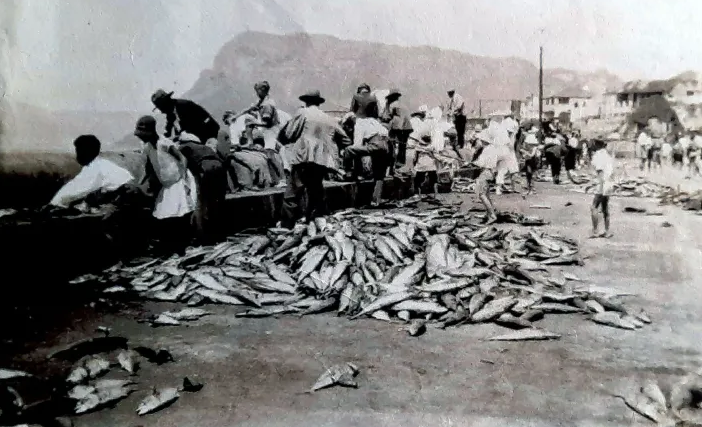
A successful businessman from Johannesburg was visiting Kalk Bay when he noticed a local fisherman docking his small wooden boat.
Inside, he had a few large yellowtail and snoek.
The Joburger complimented the fisherman on his fresh catch and asked:
"How long did it take you to catch these?"
The fisherman replied:
"Not too long, just a couple of hours."
The businessman asked:
"Why don't you stay out longer and catch more?"
The fisherman smiled.
"This is enough for my family. I don't need more."
The Joburger, puzzled, asked:
"But what do you do with the rest of your time?"
The fisherman giggled.
"I sleep in, fish a little, spend time with my kids, take a midday nap with my wife, walk along the beach, and in the evenings, I go to the harbour, braai some fish, sip a cold beer, and play guitar with my mates."
The Joburger scoffed.
"Listen, I run a big company in Sandton. I could help you."
"If you spent more time fishing, you could save up and buy a bigger boat."
"With that, you'd catch even more fish, sell them directly to restaurants, then buy more boats and build a whole fleet."
"Instead of selling your fish to middlemen, you'd start your own processing company, eventually supplying all of Cape Town and beyond."
"You'd need to leave Kalk Bay, move to the city, and eventually run your empire from Johannesburg."
The fisherman raised an eyebrow.
"And how long will all of this take?"
The Joburger thought for a moment.
"Probably 15 to 20 years."
"And then?"
The Joburger grinned.
"Then, when the time is right, you'd sell your company for millions, retire, and move to a quiet coastal town where you could sleep in, fish a little, spend time with your kids, take naps with your wife, walk on the beach, and in the evenings, braai some fish, sip a cold beer, and play guitar with your mates."
The fisherman laughed, shook his head, and paddled off, humming a tune as the sun set over the ocean.
Now take a moment to understand what happened.
The businessman had just described a journey that would take the fisherman 15 to 20 years.
Years of expansion.
Years of financial risk.
Years of managing employees.
Years of building an empire.
And what was the final reward?
The opportunity to return to the life the fisherman was already enjoying.
Think about that.
What if the life you are working so hard to achieve already contains some of the things you are sacrificing to get there?
2. What Is Enough?
Let me ask you a question.
How much is enough?
R10,000?
R100,000?
R1 million?
R10 million?
At what point will you say:
"I have enough."
Consider the fisherman.
He had caught enough fish to provide for his family.
He was satisfied with his day's work.
He had time for his wife.
Time for his children.
Time for his friends.
And time to enjoy the place where he lived.
The businessman saw an opportunity for expansion.
But the fisherman saw a life he was already grateful to have.
Does this mean the fisherman should never improve his business?
No.
Does it mean earning more money is wrong?
No.
But it challenges us to understand the difference between growth and endless dissatisfaction.
There is nothing wrong with wanting to provide better opportunities for your family.
There is nothing wrong with building a successful business.
There is nothing wrong with developing your gifts and abilities.
But if your definition of enough keeps moving every time you reach it, when will you ever experience contentment?
Ambition can help you build a better future. But ambition without contentment can prevent you from appreciating the life you have today.
3. True Life Is Not in the Abundance of Possessions
Jesus gave a warning about greed.
"And he said unto them, Take heed, and beware of covetousness: for a man's life consisteth not in the abundance of the things which he possesseth."
LUKE 12:15 — KJV
Notice what Jesus is teaching.
He does not say that possessions have no practical value.
He says that a person's life does not consist in the abundance of possessions.
There is a difference.
A house can provide shelter.
A vehicle can provide transport.
Money can provide food, education, healthcare, and opportunities.
These things matter.
But they do not define the entire value of a human life.
Consider someone who owns a beautiful house but has no peace within it.
Someone who earns a large salary but never has time for their family.
Someone who owns several vehicles but struggles to maintain meaningful relationships.
Or someone who has achieved professional success but feels completely disconnected from their purpose.
Would you describe that person as wealthy?
Financially, perhaps.
But what about the other areas of life?
What about peace?
What about relationships?
What about character?
What about faith?
What about the time we have with the people we love?
The fisherman understood that his life contained value beyond the fish he could sell.
And that is what the businessman had not yet considered.
Possessions can improve the conditions in which you live. But they cannot, by themselves, give your life meaning.
4. The Parable of the Rich Fool
Jesus told a parable about a wealthy man whose land produced an abundant harvest.
The man had more crops than he could store.
So he began planning what he would do with his surplus.
"And he said, This will I do: I will pull down my barns, and build greater; and there will I bestow all my fruits and my goods."
LUKE 12:18 — KJV
Now consider the man's reasoning.
He had an abundant harvest.
He needed more storage.
And he planned to expand his capacity.
At first, that may sound like ordinary business planning.
But listen to what he says next.
"And I will say to my soul, Soul, thou hast much goods laid up for many years; take thine ease, eat, drink, and be merry."
LUKE 12:19 — KJV
The man believed his stored possessions guaranteed his future.
He thought he had secured enough wealth to enjoy many years of comfort.
But there was something he had failed to consider.
His life was not guaranteed.
"But God said unto him, Thou fool, this night thy soul shall be required of thee: then whose shall those things be, which thou hast provided?"
LUKE 12:20 — KJV
Jesus closes the parable with a warning.
"So is he that layeth up treasure for himself, and is not rich toward God."
LUKE 12:21 — KJV
What was the problem?
Was it the harvest?
Was it the barns?
Was it the man's ability to produce wealth?
The warning is deeper than that.
He had made his possessions the foundation of his security while neglecting his responsibility towards God.
Now return to the fisherman.
The businessman believed that after building an empire, the fisherman could finally enjoy life.
But neither man could guarantee that he would live another 20 years.
And that is why this parable matters.
Plan for tomorrow, but do not live as though tomorrow has been promised to you.
5. Gaining the World but Losing Your Soul
Brothers and sisters, consider the price of success.
What are you willing to sacrifice to achieve your goals?
Your time?
Your health?
Your relationships?
Your integrity?
Your faith?
Jesus asks a question that challenges the way we measure success.
"For what shall it profit a man, if he shall gain the whole world, and lose his own soul?"
MARK 8:36 — KJV
Take time to understand this question.
Imagine achieving everything you wanted.
The title.
The salary.
The business.
The property.
The recognition.
But in pursuing these things, you abandon your values.
You become dishonest.
You mistreat people.
You neglect important relationships.
And you lose sight of your relationship with God.
What have you gained?
And what have you lost?
Now understand something.
Hard work is not the enemy.
Excellence is not the enemy.
Ambition is not the enemy.
But when the pursuit of success causes us to abandon the very principles that should guide our lives, we must question the direction we are travelling.
The businessman had a plan to make the fisherman wealthy.
But he never asked whether the fisherman wanted that life.
He assumed that more money would automatically create a better future.
And in doing so, he overlooked the value of what the fisherman already possessed.
Do not become so focused on gaining the world that you forget to consider what your pursuit may be costing you.
6. The Trap of Riches
What is the difference between having money and loving money?
Consider two people.
One earns a large income and uses it responsibly.
They provide for their family.
They help others.
They conduct their business honestly.
And they remain grateful for what they have.
The other person may earn much less.
But they are consumed by envy.
They constantly compare themselves to others.
They are willing to compromise their values to acquire more.
Which person is more controlled by money?
Paul warns Timothy about the dangers associated with the desire to become rich.
"But they that will be rich fall into temptation and a snare, and into many foolish and hurtful lusts, which drown men in destruction and perdition."
1 TIMOTHY 6:9 — KJV
"For the love of money is the root of all evil: which while some coveted after, they have erred from the faith, and pierced themselves through with many sorrows."
1 TIMOTHY 6:10 — KJV
Notice the warning.
Paul speaks about the love of money.
He is addressing the danger of allowing the pursuit of wealth to dominate our desires and decisions.
Now return to the Joburger.
He saw the fisherman's small boat.
And immediately began imagining a bigger one.
Then another boat.
Then a fleet.
Then a processing company.
Then an empire.
At what point would the expansion stop?
The businessman had an answer.
After 15 to 20 years.
But the fisherman already had a different answer.
He had enough for his family.
The lesson is not that expansion is wrong.
The lesson is that we should understand what motivates our desire for more.
Money is a useful resource. But when it becomes the purpose of your existence, it can begin controlling the life it was supposed to improve.
7. Learning Contentment
Let us speak about contentment.
What does it mean to be content?
Does it mean you stop working?
Does it mean you stop learning?
Does it mean you should never pursue a better opportunity?
No.
Contentment does not require us to abandon growth.
It challenges us to avoid making our peace entirely dependent on circumstances.
The Apostle Paul writes:
"Not that I speak in respect of want: for I have learned, in whatsoever state I am, therewith to be content."
PHILIPPIANS 4:11 — KJV
"I know both how to be abased, and I know how to abound: every where and in all things I am instructed both to be full and to be hungry, both to abound and to suffer need."
PHILIPPIANS 4:12 — KJV
Paul had experienced different circumstances.
Times of provision.
Times of need.
Times of comfort.
And times of hardship.
Yet he speaks about learning contentment.
Notice that word.
Learning.
Contentment is not always something that comes naturally.
It can require discipline.
Gratitude.
Perspective.
And faith.
Consider the fisherman.
He was not refusing to work.
He had already worked.
He had caught fish.
He had provided for his family.
And he was satisfied with what he had accomplished that day.
His contentment allowed him to enjoy the other parts of his life.
Now ask yourself:
Can you appreciate what you have while continuing to work towards what you want?
Can you celebrate progress without constantly comparing yourself to someone else?
Can you remain grateful even when your circumstances are not perfect?
Contentment is not the absence of ambition. It is the ability to pursue your ambitions without allowing them to steal your gratitude and peace.
8. The Value of Time
Brothers and sisters, there is something the fisherman understood that deserves our attention.
Time.
Consider your money.
You can earn more.
You can save more.
You can invest.
You can build a business.
And in certain circumstances, you can recover financial losses.
But what about time?
Can you recover yesterday?
Can you return to your child's first steps?
Can you return to a conversation you never had?
Can you recover the years you spent neglecting your health or relationships?
Time continues moving.
And every decision involves an opportunity cost.
When you choose to spend your time doing one thing, you cannot spend that same moment doing something else.
Scripture encourages us to recognise the value of our days.
"So teach us to number our days, that we may apply our hearts unto wisdom."
PSALM 90:12 — KJV
What does it mean to number our days?
It means recognising that our time is limited.
And allowing that understanding to influence how we live.
Now consider the businessman.
He suggested that the fisherman spend 15 to 20 years building an empire.
Perhaps that journey would create financial opportunities.
Perhaps it would provide employment for others.
Perhaps it would create a valuable business.
But it would also require time.
Time away from certain activities.
Time devoted to responsibilities.
Time spent managing risks and challenges.
The fisherman had already decided that some of his time was worth protecting.
Time with his wife.
Time with his children.
Time with his friends.
And time to enjoy the life he was living.
There is wisdom in understanding that time itself is valuable.
Do not spend your entire life preparing to enjoy a future that you may never reach, while neglecting the meaningful moments available to you today.
9. Wealth With Purpose
Now let us consider another perspective.
What if the fisherman wanted to expand his business?
Would that automatically be wrong?
No.
What if he wanted to buy another boat?
Employ people from his community?
Supply local restaurants?
Build a company that could support future generations?
These could be meaningful goals.
Wealth can be used responsibly.
Businesses can create employment.
Profits can support families.
Resources can be used to help people in need.
And financial stability can provide opportunities that would otherwise be difficult to access.
The question is not simply how much wealth we acquire.
The question is how we acquire it and what we do with it.
Paul instructs Timothy concerning those who possess wealth.
"That they do good, that they be rich in good works, ready to distribute, willing to communicate."
1 TIMOTHY 6:18 — KJV
The instruction is not to abandon every possession.
It is to use resources with generosity and responsibility.
Now consider two successful business owners.
One uses their position to exploit others.
They refuse to act honestly.
They care only about accumulating more.
The other treats employees fairly.
They fulfil their responsibilities.
They provide for their family.
They support meaningful causes.
And they recognise that their wealth does not make them more valuable than other people.
Both may be financially successful.
But their conduct tells two different stories.
So do not misunderstand the fisherman.
He is not teaching us that every person should remain exactly where they are.
He is challenging us to examine our reasons for pursuing more.
Building wealth can be a worthwhile ambition. But wealth becomes more meaningful when it is guided by purpose, integrity, generosity, and responsibility.
10. Becoming Rich Towards God
What does it mean to be rich towards God?
Is it determined by your bank balance?
Your property portfolio?
Your business valuation?
Or the title on your business card?
Jesus warns us against making material possessions the centre of our lives.
"But seek ye first the kingdom of God, and his righteousness; and all these things shall be added unto you."
MATTHEW 6:33 — KJV
In Matthew 6, Jesus teaches about trusting God rather than being consumed by anxiety over material needs.
He directs His followers towards God's Kingdom and righteousness.
Now consider what this means for our everyday decisions.
Are we honest in the way we earn money?
Are we responsible with what has been entrusted to us?
Do we treat people with dignity?
Do we show generosity?
Do we honour our commitments?
Do we make time for the people who depend upon us?
And do we allow God's teachings to influence our understanding of success?
Being rich towards God involves more than financial generosity.
It includes the direction of our hearts and the conduct of our lives.
Now return to Kalk Bay.
The fisherman had a small boat.
A modest catch.
And a simple daily routine.
The businessman had knowledge, experience, and the ability to imagine a much larger enterprise.
Neither man's occupation determined his spiritual worth.
And we cannot know everything about either man's relationship with God from this short story.
But the parable invites us to examine a powerful question.
Are we building our lives around what truly matters, or are we continually postponing what matters until we have accumulated more?
True wealth is not simply measured by what you possess. It is also reflected in your character, your relationships, your use of time, and your faithfulness to God.
Final Reflection
Brothers and sisters, take time to understand this closing.
A successful businessman travelled from Johannesburg to Kalk Bay.
He met a fisherman who had caught enough fish to provide for his family.
The businessman saw opportunity.
He saw a bigger boat.
More fish.
More customers.
More employees.
More boats.
A processing company.
And eventually, an empire.
He imagined 15 to 20 years of expansion.
And after all those years, he imagined the fisherman selling his company for millions.
Then retiring.
Then moving to a quiet coastal town.
Then spending time with his wife and children.
Then fishing for enjoyment.
Then walking along the beach.
Then braaing fish and playing guitar with his mates.
But brothers and sisters, what was the fisherman already doing?
He was already living much of the life the businessman wanted him to work 20 years to achieve.
Now let me ask you something.
What are you chasing?
And why?
Are you pursuing wealth to provide for your family?
To create opportunities?
To serve others?
To develop your abilities?
Or have you reached a point where the pursuit of more has become your entire purpose?
Consider the life you are building.
Do you have time for your family?
Do you have time for your health?
Do you have time for meaningful relationships?
Do you have time to serve your community?
Do you have time to grow in wisdom and faith?
Or are you continually telling yourself:
"One day."
One day, when I earn more.
One day, when I receive that promotion.
One day, when my business grows.
One day, when I buy that house.
One day, when I retire.
Then I will begin enjoying my life.
But what happens if that day never arrives?
What happens if the people you intended to spend time with are no longer there?
What happens if your health changes?
What happens if you discover that you spent decades accumulating possessions while neglecting the very relationships you hoped those possessions would benefit?
Money can be earned again. But yesterday cannot be recovered.
Now understand me carefully.
I am not telling you to abandon your ambitions.
I am not telling you to stop working hard.
I am not telling you that becoming wealthy is wrong.
Build your business.
Develop your gifts.
Improve your circumstances.
Provide for your family.
Create opportunities for others.
And pursue excellence in the work you have been given.
But while you do these things, remember what Jesus taught.
Life does not consist in the abundance of possessions.
Remember the rich fool who built bigger barns but could not guarantee another day of life.
Remember Paul's warning about the love of money.
Remember his teaching about contentment.
And remember Jesus' question about gaining the whole world while losing your soul.
These teachings challenge us to examine our priorities.
Because the real danger is not simply having wealth.
The danger is allowing wealth to become the master of your life.
So let us seek a different understanding of success.
One that values responsibility.
One that values family.
One that values time.
One that values honesty.
One that values generosity.
One that values contentment.
And above all, one that seeks God's Kingdom and righteousness.
Brothers and sisters, there is nothing wrong with wanting more from life.
But before you sacrifice what you have for what you want, make sure you understand the value of both.
Because sometimes true wealth is not found in having more.
Sometimes it is found in recognising that what you already have is worth more than you realised.
May we work with purpose, live with gratitude, and use the time and resources entrusted to us wisely.
Amen.