
ONE GOD AFRICA · KINGDOM WISDOM
Being a Leader in God's Kingdom
Leadership. Growth. Perseverance. Faith. Your experiences are part of your preparation.
Life begins with the process of meeting your parents. For many of us, they become our first leaders, guiding us as we take our initial steps on the path of life.
But everyone enters life through different doors.
Some are born into safe and nurturing homes. Others begin their journey in difficult environments. Some grow up with both parents. Others grow up with one parent, grandparents, guardians, or without consistent parental guidance.
Yet one thing remains the same.
We all enter life, and we all begin a journey of learning.
As we grow, we accumulate experiences, beliefs, lessons, morals, cultures, and different ways of understanding the world.
These experiences shape us into unique individuals, each following a different path.
But what does any of this have to do with leadership?
Everything.
Because leadership does not begin when someone gives you a title. It begins with the lessons you learn, the character you develop, and the example you set for others.
1. Your First Leaders
Think about the first people who influenced your life.
For many, it was a mother and father.
For others, it was a grandparent, a teacher, a guardian, or someone in the community who stepped forward when guidance was needed.
Before you understood what leadership meant, you were already learning from someone else's example.
You learned how people communicate.
You learned how they respond to difficulty.
You learned what they consider right and wrong.
And whether they realised it or not, their actions were teaching you.
"Train up a child in the way he should go: and when he is old, he will not depart from it."
PROVERBS 22:6 — KJV
Proverbs teaches the importance of guiding children early in life.
This is wisdom about the influence of upbringing, not a guarantee that every child will make the same choices as an adult.
But consider the responsibility.
When a child watches an adult, that child is learning more than words.
If you teach honesty but practise dishonesty, which lesson are you demonstrating?
If you demand respect but continually disrespect others, what example are you setting?
If you tell children to persevere but abandon every responsibility when it becomes difficult, what are they learning?
Leadership begins long before the title.
The first responsibility of a leader is to recognise that someone may be learning from the way they live.
2. Different Doors Into Life
We do not all begin life with the same opportunities.
Some children are born into homes with financial security.
Others grow up where their parents struggle to put food on the table.
Some have access to excellent schools.
Others must travel long distances simply to receive an education.
Some grow up surrounded by people who encourage them.
Others must learn to recognise wisdom in environments where poor decisions are common.
Different homes.
Different communities.
Different experiences.
Different starting points.
But we must be careful not to judge someone's entire future by the circumstances into which they were born.
A difficult beginning does not make a person less valuable.
Neither does a comfortable beginning automatically produce wisdom.
"For there is no respect of persons with God."
ROMANS 2:11 — KJV
Paul's words concern God's impartial judgment. They remind us that status and background do not place someone beyond moral accountability or make them inherently superior.
When we lead, we must recognise that people carry experiences we may never have lived through.
That is why listening matters.
Understanding matters.
Humility matters.
You cannot lead everyone effectively by assuming they have all walked the same road as you.
Do not judge a person's potential only by the door through which they entered life. Look at their character, their willingness to learn, and the direction they are choosing.
3. Crawl Before You Run
Think about how you learned to move.
You did not enter the world knowing how to run.
For many children, the journey begins with crawling.
Then standing.
Then taking the first steps.
Then walking with confidence.
Eventually, running.
Some children develop differently, but the lesson remains: growth takes time and practice.
Now think about the number of times you fell while learning.
Did falling mean you were not meant to walk?
No.
It meant you were still learning.
As adults, we sometimes forget this simple lesson.
We begin something new, encounter difficulty, and immediately question whether we should continue.
We compare ourselves with people who have been practising for years.
We expect ourselves to run while we are still learning how to stand.
"My brethren, count it all joy when ye fall into divers temptations; Knowing this, that the trying of your faith worketh patience."
JAMES 1:2–3 — KJV
James teaches that trials can develop endurance.
That does not mean every hardship is good or that suffering should be pursued for its own sake.
It means difficulty does not have to be the end of our development.
There are lessons we learn when things go well.
And there are lessons we learn when things do not go according to plan.
Both can shape how we respond to the next challenge.
You crawled before you walked. You walked before you ran. Do not abandon your growth because you have not yet mastered the next level.
4. What Is the Point?
What is the point of all these experiences?
Why do we learn?
Why do we fall?
Why do we get back up?
And what does any of this have to do with becoming a leader in God's Kingdom?
I want you to focus on four things.
Leadership
Leadership is the responsibility of influencing others through your example, decisions, and actions.
You do not need a management position to demonstrate leadership.
A parent can lead.
A teacher can lead.
A young person can lead.
Someone helping their community can lead.
Growth
Growth requires learning.
It requires recognising what you do not yet know and developing the skills and habits needed to improve.
Perseverance
Perseverance is continuing to pursue what is right and worthwhile when the journey becomes difficult.
It is not refusing to rest or ignoring the need for help.
Sometimes perseverance means changing your approach rather than abandoning your purpose.
Different Paths
Not everyone will follow your journey.
Some people will learn lessons earlier than you.
Others will learn them later.
Some will experience challenges you have never faced.
And you may experience challenges they will never understand.
That does not mean one life is automatically more meaningful than another.
"The steps of a good man are ordered by the LORD: and he delighteth in his way. Though he fall, he shall not be utterly cast down: for the LORD upholdeth him with his hand."
PSALM 37:23–24 — KJV
The psalm does not promise that a faithful person will never stumble.
It speaks of God's sustaining care even when that person falls.
Leadership, growth, perseverance, and the different paths we take are not separate from life. They are part of how our character is developed.
5. Leadership Begins With Example
Many people want to become leaders.
But what do they believe leadership looks like?
A title?
A position?
A large following?
The ability to tell others what to do?
Those things may come with certain leadership positions.
But none of them automatically makes someone a good leader.
Think about a young person who consistently demonstrates honesty, discipline, and respect.
That person may have no formal authority.
Yet others may begin to follow their example.
Now think about someone with an important title who continually mistreats people.
They may have authority, but are they demonstrating the character of a leader worth following?
"Let no man despise thy youth; but be thou an example of the believers, in word, in conversation, in charity, in spirit, in faith, in purity."
1 TIMOTHY 4:12 — KJV
Paul encouraged Timothy not to allow his youth to prevent him from setting an example.
Notice what Paul emphasised.
Speech.
Conduct.
Love.
Faith.
Purity.
These are qualities of character.
Paul did not tell Timothy that he needed to become famous before he could lead.
He told him to set an example.
That is something every person can begin practising.
In your home.
At work.
At school.
In your community.
And especially when nobody is watching.
Leadership is not measured only by how many people follow you. It is also measured by the example you give them to follow.
6. Don't Quit — Keep the Faith
If you believe in God as the Creator of life, you understand that life will not always be easy.
You will face challenges.
You may experience rejection.
You may lose things you worked hard to build.
And there may be moments when you question whether you have the strength to continue.
But no matter what, don't quit.
Do not quit on the belief that your life can still carry meaning.
Do not quit on the responsibility to grow.
Do not quit on doing what is right simply because the road has become difficult.
I have faced my own trials.
I lost friends.
I lost strength.
I lost courage.
I lost time and money.
I found myself on my knees, lonely and broke.
Yet I never stopped believing.
And that is why I want to remind you of something.
You do make a difference.
Lose your job?
Keep the faith.
Lose your house?
Keep the faith.
Find yourself moving back into your mother's home?
Keep the faith.
Experience serious illness or lose a kidney?
Keep the faith, and receive the care and support you need.
Even if your marriage ends?
Keep the faith.
These experiences may change your circumstances.
But they do not automatically remove your dignity, your ability to grow, or the possibility of a meaningful future.
"We are troubled on every side, yet not distressed; we are perplexed, but not in despair; Persecuted, but not forsaken; cast down, but not destroyed."
2 CORINTHIANS 4:8–9 — KJV
Paul did not describe a life without hardship.
He described hardship without surrendering hope.
And that is an important distinction.
Keeping the faith does not mean pretending you are never tired.
It does not mean refusing help.
It means recognising that your present difficulty does not have to define the whole of your future.
You may lose your possessions, your position, or the life you once knew. But do not allow those losses to convince you that your life no longer matters. You do make a difference.
7. Your Life Is Your CV
Think about a curriculum vitae.
A CV records your experience.
Your skills.
Your responsibilities.
Your achievements.
And sometimes the people who can provide references about your work.
Now think about your life.
Every experience becomes part of your story.
Every lesson teaches you something.
Every mistake presents an opportunity to take responsibility and improve.
Every challenge tests how you respond.
Over time, you develop a record of decisions, habits, relationships, and experiences.
Your life becomes your CV, if you will.
And the people around you become witnesses to the way you have lived.
Some may speak about your perseverance.
Others may remember your generosity.
Some may remember how you helped them when they had nothing.
And others may remember mistakes you made.
That is why character matters.
You cannot always control what people say about your past.
But you can take responsibility for what you do next.
"Brethren, I count not myself to have apprehended: but this one thing I do, forgetting those things which are behind, and reaching forth unto those things which are before, I press toward the mark for the prize of the high calling of God in Christ Jesus."
PHILIPPIANS 3:13–14 — KJV
Paul's words do not mean that we should deny our past or avoid accountability.
They mean we should not become so consumed by what is behind us that we stop pursuing what is ahead.
If you have made mistakes, learn from them.
If you have hurt someone, take responsibility where you can.
If you have developed harmful habits, work towards changing them.
If you have gained wisdom, use it.
Your past is part of your life story, but it does not have to be the final chapter. Keep learning. Keep growing. Keep building a life worth learning from.
8. Your Experience Can Help Others
Why do we gain experience?
Is it only for ourselves?
Or can what we have learned become useful to someone else?
Think about a person who has struggled with addiction and worked towards recovery.
That person may understand challenges that others have never experienced.
They may be able to encourage someone who is still struggling.
Think about someone who lost a job and had to rebuild their life.
They may be able to offer practical advice to another person facing unemployment.
Think about someone who grew up without consistent guidance.
They may understand the importance of being present for young people who need a trustworthy adult.
Our experiences do not automatically make us wise.
But when we reflect, learn, and develop character, those experiences can help us serve others.
"And we know that all things work together for good to them that love God, to them who are the called according to his purpose."
ROMANS 8:28 — KJV
This does not mean every painful event is good.
It means Christians can trust that God is able to work through circumstances that are difficult and imperfect.
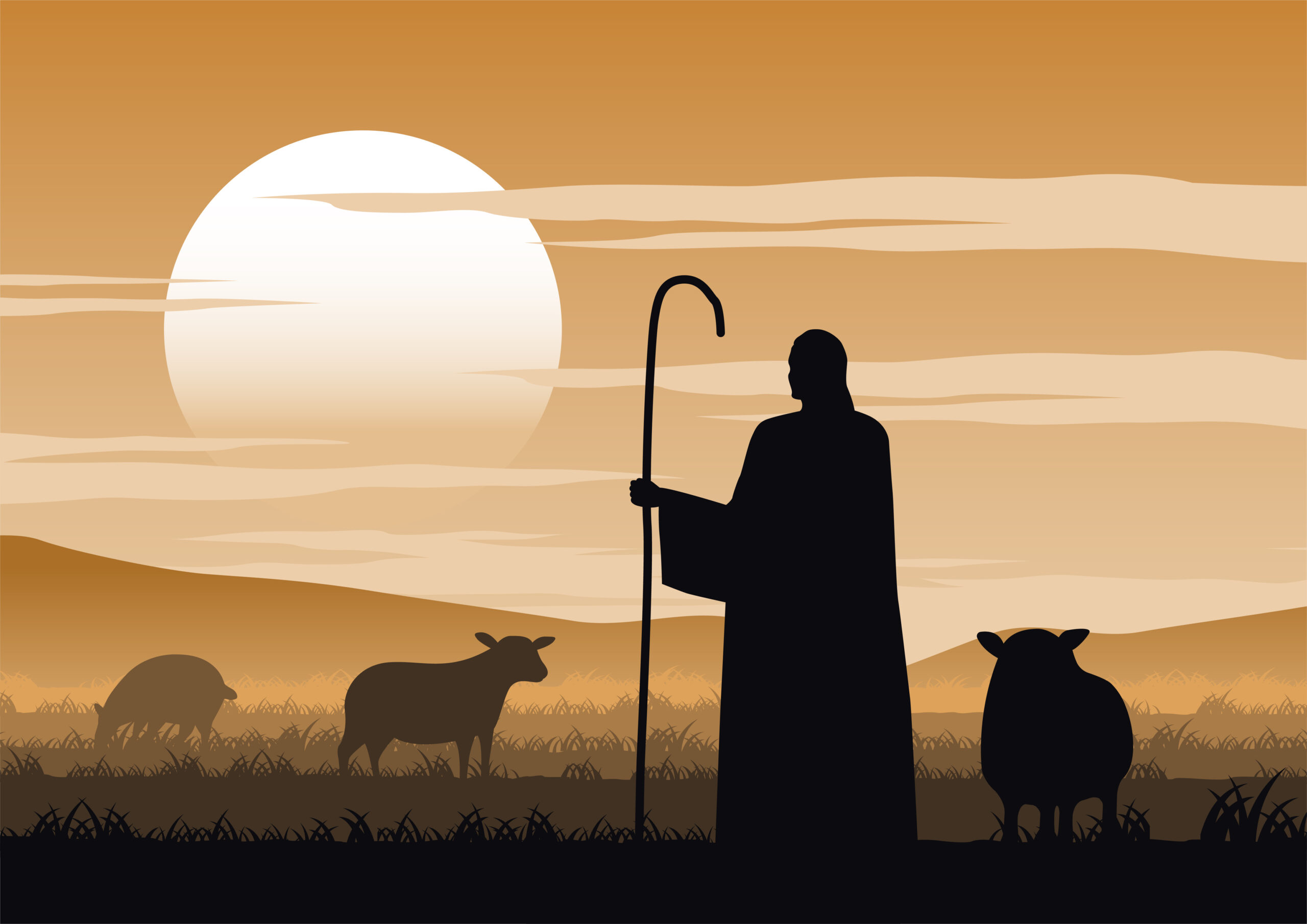
Now think about the example of a shepherd.
A shepherd must pay attention to the sheep entrusted to his care.
He must recognise danger.
He must know when to guide and when to protect.
He cannot care for the flock effectively if he is only interested in his own importance.
Jesus identifies Himself as the good shepherd.
"I am the good shepherd: the good shepherd giveth his life for the sheep."
JOHN 10:11 — KJV
Jesus is the shepherd we follow.
And those who lead others in His name are called to reflect His care rather than claim His place.
You may have experiences that equip you to encourage someone else.
You may understand a struggle that another person is facing.
You may be able to offer guidance, companionship, or practical help.
That does not mean you must have every answer.
It means you can use what you have learned responsibly.
Do not waste the wisdom you have gained. Someone else may be facing a challenge you have already learned how to navigate.
9. Follow the Greatest Leader
When we read the Bible, we encounter many examples of leadership.
Moses led the Israelites through the wilderness.
Joshua accepted responsibility after Moses.
David demonstrated courage, but also made serious mistakes.
Nehemiah organised people to rebuild Jerusalem's walls.
Paul travelled, taught, endured persecution, and worked with others to spread the Gospel.
Each life provides lessons.
But Christians recognise Jesus Christ as the greatest example of leadership.
Why?
Because His leadership was not built upon personal status or the pursuit of earthly power.
He taught.
He served.
He showed compassion.
He challenged hypocrisy.
He demonstrated obedience to the Father.
And He gave His life.
"For even the Son of man came not to be ministered unto, but to minister, and to give his life a ransom for many."
MARK 10:45 — KJV
Now consider how different that is from the way leadership is sometimes understood in the world.
Some people believe leadership means being served.
Jesus teaches the importance of serving.
Some believe leadership means placing themselves above others.
Jesus demonstrates humility.
Some believe leadership means never admitting weakness.
Jesus shows us the importance of obedience, sacrifice, and faithfulness even through suffering.
If we want to become leaders in God's Kingdom, we must examine the example we are following.
Do not measure your leadership only by the authority you have over others. Measure it by the responsibility you accept and the example you set.
10. Be a Doer, Not Just a Hearer
In closing, brothers and sisters, there is something we must understand.
We can spend our entire lives listening to teachings about wisdom.
We can memorise Scripture.
We can speak about faith.
We can tell others how they should live.
But what happens when our actions do not reflect what we believe?
What kind of leadership are we demonstrating?
Paul teaches about the fruit of the Spirit.
"But the fruit of the Spirit is love, joy, peace, longsuffering, gentleness, goodness, faith, Meekness, temperance: against such there is no law."
GALATIANS 5:22–23 — KJV
These qualities are often expressed in modern English as:
Love. Joy. Peace. Patience. Kindness. Goodness. Faithfulness. Gentleness. Self-control.
Now examine your own leadership.
Do you demonstrate love when someone disagrees with you?
Do you practise patience when someone is still learning?
Do you show kindness to people who cannot offer you anything in return?
Are you faithful to your responsibilities?
Do you exercise self-control when you are angry or frustrated?
These are not simply words to memorise.
They are qualities to practise.
And none of us should assume that we have perfected them.
Just as we once learned to stand before we could walk, we must continue growing in character.
Sometimes we will fall short.
When we do, we should recognise it, take responsibility, and continue learning.
"But be ye doers of the word, and not hearers only, deceiving your own selves."
JAMES 1:22 — KJV
James reminds us that hearing the Word is not enough.
We must put it into practice.
That is the challenge of leadership.
Not simply knowing what is right.
But choosing to do what is right.
Not simply teaching others about perseverance.
But demonstrating perseverance.
Not simply speaking about love.
But showing love.
Leadership in God's Kingdom is not only about what you know or what you say. It is about what you practise, especially when doing the right thing is difficult.
Final Reflection
Brothers and sisters, remember where your journey began.
You entered life with much to learn.
You needed guidance.
You needed patience.
You needed someone to help you understand the world around you.
For many of us, that guidance came from our parents.
For others, it came from people who stepped forward when our parents could not.
And as we grew, we learned to crawl, stand, walk, and eventually run.
We made mistakes.
We fell.
We got back up.
Now think about where you are today.
Perhaps you have achieved things you once believed were impossible.
Perhaps you are still trying to rebuild after a difficult season.
Perhaps you have lost friends, money, employment, confidence, or relationships.
Perhaps you are exhausted from trying to hold everything together.
Whatever your circumstances, I want to remind you of something.
You do make a difference.
Do not allow the world to convince you that your past mistakes are the only things that define you.
Do not allow your current struggles to convince you that your journey is over.
And do not believe that you must first become wealthy, famous, or powerful before you can help another person.
You may already have something valuable to offer.
Your experience.
Your knowledge.
Your willingness to listen.
Your example.
Your ability to help someone who is facing a challenge you understand.
But remember, the goal is not simply to become a leader.
The goal is to become a leader worth following.
A leader who demonstrates love.
A leader who exercises patience.
A leader who practises kindness.
A leader who remains faithful to their responsibilities.
A leader who recognises the importance of self-control.
And a leader who is humble enough to admit that there is still more to learn.
Look to Jesus Christ as the greatest example of leadership.
Follow His example of service, compassion, humility, and faithfulness.
And remember the words of James.
Do not merely listen to the Word. Do what it says.
Because leadership is not only about the lessons you have learned.
It is about what you do with those lessons.
So keep growing.
Keep learning.
Keep the faith.
And when you have gained the wisdom to help someone else, do not keep it only for yourself.
Become a leader in God's Kingdom through your actions, your character, and your willingness to serve.
You do make a difference.
Amen.